Before YouTube Taught America to Fix Things: When Hardware Stores Were Universities

The Professor Behind the Counter
Bill Kowalski could diagnose a plumbing problem just by listening to how you described the sound your pipes made at 3 AM. He'd been running Kowalski Hardware on Maple Street since 1953, and by the 1970s, he'd become something between a shopkeeper and a trade school instructor for half the neighborhood.
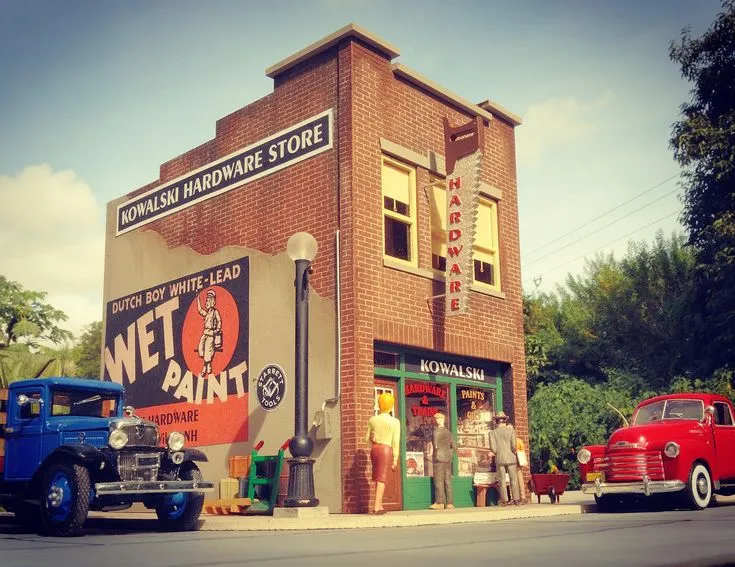 Photo: Kowalski Hardware, via i.pinimg.com
Walk into his store with a vague description of a household problem, and Bill would ask three precise questions, disappear into the back room, and return with exactly what you needed—plus a ten-minute tutorial on how to use it properly. His customers rarely made return trips for the same problem.
This was the golden age of American hardware stores, when buying supplies came with a free education and small business owners served as the bridge between professional expertise and amateur enthusiasm.
The Neighborhood Trade School
In 1965, America had over 70,000 independent hardware stores, most run by owners who had learned their trade through decades of hands-on experience. These weren't just retail spaces—they were informal universities where ordinary homeowners could access the kind of knowledge that had previously been limited to professional tradesmen.
The typical hardware store owner could guide customers through everything from rewiring a lamp to rebuilding a carburetor. They knew which tools would last and which were waste of money, could recommend the right grade of sandpaper for refinishing furniture, and would often loan specialized tools for one-time projects.
Customers would arrive with broken appliances, mysterious hardware pieces, or half-formed ideas about home improvement projects. The store owner would examine the evidence, ask about the specific situation, and provide a complete solution—not just the parts, but the knowledge to use them successfully.
When Shopping Came With Mentorship
The interaction between customer and hardware store owner operated on a completely different model than today's retail experience. Transactions weren't rushed, and advice wasn't an upsell—it was simply how business was conducted.
A typical Saturday morning might find Bill explaining to Mrs. Patterson why her faucet was dripping (worn washers, not the entire mechanism), showing young Tom Henderson how to properly measure for replacement window screens, and helping the Johnsons plan their kitchen renovation project from start to finish.
These conversations often extended well beyond the immediate purchase. Hardware store owners would remember your previous projects, follow up on how repairs had worked out, and suggest maintenance schedules to prevent future problems. They served as informal consultants for the American do-it-yourself movement that was transforming suburban life.
The Death of Expertise
The arrival of big-box home improvement stores in the 1980s promised lower prices and wider selection—and delivered on both promises. But something crucial was lost in the translation from neighborhood hardware store to warehouse retail.
Today's home improvement shopping experience typically involves wandering through acres of products, reading package labels for guidance, and hoping that online reviews can substitute for professional advice. The teenage employee wearing an orange vest might be helpful, but they're unlikely to have the decades of experience that once came standard with hardware purchases.
The modern DIY enthusiast has access to more tools and materials than ever before, but less guidance on how to use them effectively. YouTube tutorials and online forums have partially filled the knowledge gap, but they can't replicate the personalized advice that came from someone who knew your house, your skill level, and your budget.
What We Lost in Translation
The shift from neighborhood hardware stores to big-box retailers reflects broader changes in American retail and community life. Efficiency and price became the primary considerations, while relationships and expertise were relegated to secondary concerns.
Older homeowners often describe the confidence they felt leaving Bill's hardware store—not just confidence in the products they'd purchased, but confidence in their ability to complete the project successfully. The store owner's endorsement of their plan provided reassurance that couldn't be found in any instruction manual.
Today's DIY culture is more democratic but less guided. Anyone can attempt complex home improvement projects, but they're largely on their own to figure out the details. The result is often multiple trips to the store, frustrated online searches, and projects that take far longer than they should.
The Community Connection
Neighborhood hardware stores served functions that extended beyond retail. They were gathering places where local contractors shared trade secrets, homeowners compared notes on ongoing projects, and communities developed a shared knowledge base about maintaining their built environment.
Bill's store bulletin board was covered with business cards from local electricians, plumbers, and carpenters—all personally vetted by Bill himself. When a project exceeded a homeowner's skill level, the hardware store owner could provide trusted referrals based on years of professional relationships.
This network of knowledge and trust has largely disappeared from the modern home improvement landscape. Today's homeowners rely on online reviews and contractor databases, missing the personal recommendations that once made hiring help feel less risky.
The YouTube Generation
Modern technology has democratized access to repair knowledge in ways that would have amazed Bill Kowalski. Any homeowner can now watch detailed video tutorials for virtually any repair or improvement project. Online forums provide platforms for sharing experiences and troubleshooting problems.
But this digital expertise comes with limitations. YouTube tutorials can't examine your specific situation, ask clarifying questions, or adjust their advice based on your skill level and available tools. The learning curve is often steeper, and the margin for error higher.
The most successful modern DIY enthusiasts often combine online resources with occasional visits to remaining independent hardware stores—seeking the personal guidance that no amount of digital content can fully replace.
Looking Back Through the Lens
The era of the neighborhood hardware store represented a different model of commerce—one where knowledge was as valuable as inventory and relationships mattered as much as prices. These small businesses served as bridges between professional expertise and amateur enthusiasm, making complex repairs accessible to ordinary homeowners.
While we've gained efficiency and selection in our modern retail landscape, we've lost something essential: the confidence that comes from expert guidance and the community connections that made home improvement feel less daunting. The question isn't whether we can recreate the past, but how we might rebuild those bridges between knowledge and need in our increasingly digital world.