
Three Signatures and You're Home: When Buying a House Didn't Require a Law Degree
Walk into any real estate office today and you'll need a briefcase just to carry the paperwork home. The average homebuyer now signs documents totaling more pages than most novels—a stark contrast to 1965, when buying a house meant shaking hands with the banker who coached your kid's Little League team and walking out with keys the same week.
When Your Word Was Your Credit Report
In postwar America, homebuying was refreshingly human. The local banker had lived in town for decades, knew your employment history through neighborhood gossip, and could assess your character by asking around at the barbershop. Credit scores didn't exist—your reputation did the talking.
Tom Harrison bought his first house in Cedar Rapids, Iowa, in 1967 with a process that would seem like fantasy today. He walked into First National Bank on a Tuesday morning, sat down with loan officer Bill Murphy, and explained his situation: married, steady job at the meatpacking plant, saved up $2,000 for a down payment.
 Photo: First National Bank, via seeklogo.com
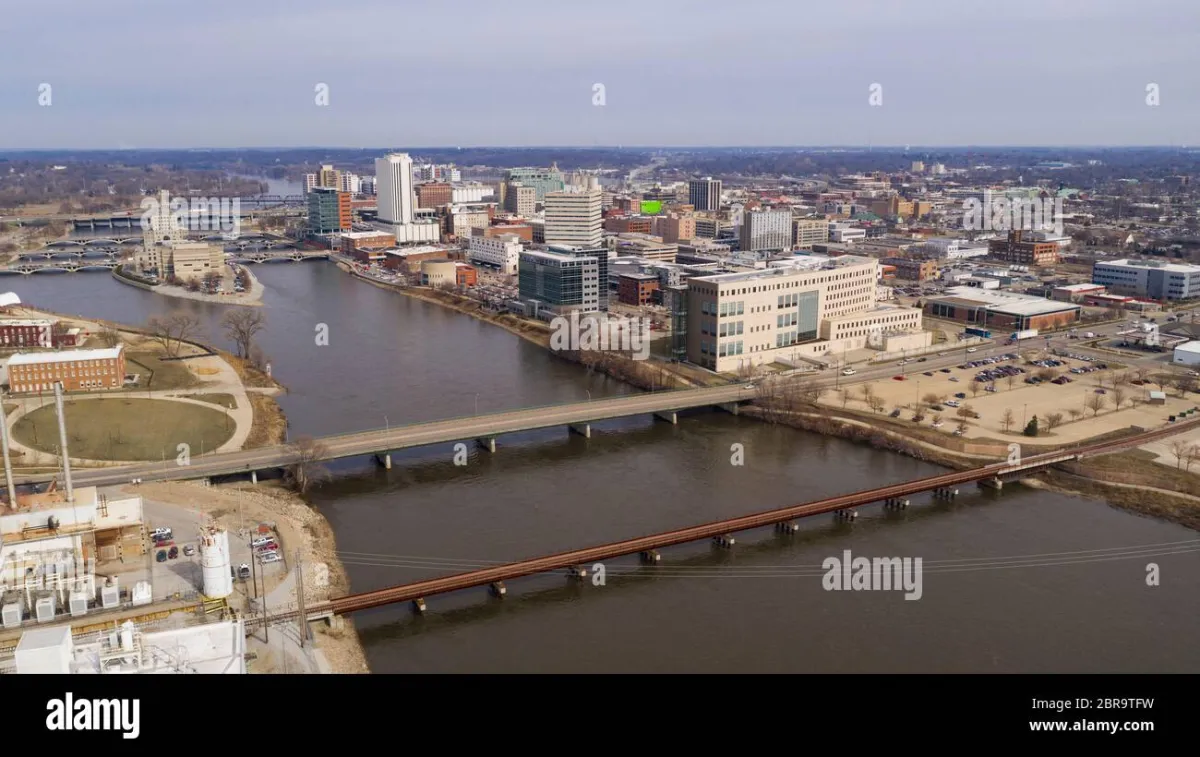 Photo: Cedar Rapids, Iowa, via c8.alamy.com
Murphy asked about Tom's work history, his family plans, and whether he understood the monthly payment obligations. No computer algorithms, no debt-to-income calculations, no employment verification forms sent to HR departments. Just two men having a conversation about whether this particular borrower could handle this particular loan.
By Friday, Tom had his approval letter. The following Tuesday, he met the seller at the bank, signed three documents, handed over a cashier's check, and walked out with deed and keys. Total time from application to ownership: eight days.
The Paper Trail Explosion
Today's mortgage process would perplex those 1960s homebuyers. The modern borrower faces a gauntlet that begins with pre-qualification letters and ends with closing statements that require professional interpretation.
Consider what's now considered standard: credit reports from three agencies, two years of tax returns, bank statements for every account, employment verification letters, gift letters if family helped with the down payment, property surveys, home inspections, termite inspections, radon tests, flood certifications, and title insurance policies that protect against problems dating back decades.
The loan estimate alone—a document designed to simplify things—runs to three pages of fine print covering everything from prepayment penalties to escrow account procedures. The closing disclosure adds another five pages of calculations and disclaimers.
When Lawyers Became Essential
In 1965, most homebuyers never saw an attorney. The bank handled the paperwork, the real estate agent managed the negotiations, and everyone trusted that standard contracts covered the basics. Legal review was for complicated commercial deals, not suburban ranch houses.
The shift toward legal complexity accelerated through the 1970s and 80s as consumer protection laws multiplied. Well-intentioned regulations designed to prevent predatory lending created layers of disclosure requirements, cooling-off periods, and right-to-cancel provisions that transformed simple transactions into legal marathons.
Today's real estate attorneys earn their fees by navigating regulations that didn't exist when their fathers bought houses. Every contract addendum, every inspection contingency, every financing clause represents another opportunity for deals to collapse over technicalities that previous generations never considered.
The Inspection Industrial Complex
The 1960s homebuyer typically conducted their own inspection: checking faucets, testing light switches, and maybe bringing along a handy uncle to examine the furnace. Serious structural problems were obvious to anyone with eyes—sagging roofs, cracked foundations, obvious water damage.
Modern home inspections have evolved into elaborate productions requiring certified professionals with specialized equipment. Inspectors now check for lead paint, asbestos, electromagnetic fields, soil contamination, and dozens of potential hazards that didn't concern earlier buyers.
The inspection report itself has become a negotiating tool, with buyers demanding credits for minor issues that previous generations would have handled with a trip to the hardware store. What was once a quick walk-through now takes hours and generates reports longer than some mortgage applications.
The Liability Revolution
Much of today's paperwork stems from liability fears that barely registered in the 1960s. Real estate agents now carry errors and omissions insurance, mortgage brokers provide detailed disclosures about compensation, and sellers complete property condition statements that attempt to document every possible defect.
The simple handshake deal became legally insufficient as courts increasingly held professionals responsible for problems they couldn't have reasonably predicted. Rather than accept reasonable risks, the industry responded by documenting everything and requiring signatures acknowledging every possible scenario.
What Speed Cost Us
The old system wasn't perfect—it excluded many buyers through informal discrimination and occasionally left people vulnerable to fraud or undisclosed problems. But it accomplished something today's process struggles with: it made homeownership feel achievable rather than intimidating.
Modern protections serve important purposes, but they've also created barriers that extend beyond paperwork. The complexity alone discourages some potential buyers, while the extended timelines favor cash purchasers who can close quickly.
The Human Element
Perhaps most significantly, the modern process has eliminated the personal relationships that once characterized homebuying. Today's borrowers interact with loan processors they'll never meet, sign documents prepared by attorneys they'll never see, and navigate approval systems that reduce their lives to credit scores and debt ratios.
The 1960s banker who knew your family history has been replaced by underwriting algorithms that measure everything except character. The result is theoretically more objective but practically more alienating.
Closing Thoughts
The transformation of homebuying from conversation to documentation reflects broader changes in American society—our increased mobility, our distrust of informal arrangements, our preference for legal protection over personal relationships.
Whether today's buyers are better protected or simply more burdened depends largely on perspective. What's certain is that the dream of homeownership now requires navigating a process that would have seemed impossibly complex to the generation that built suburban America with handshakes and good faith.
The keys still unlock the same doors, but getting them now requires a journey that's become almost as significant as the destination itself.