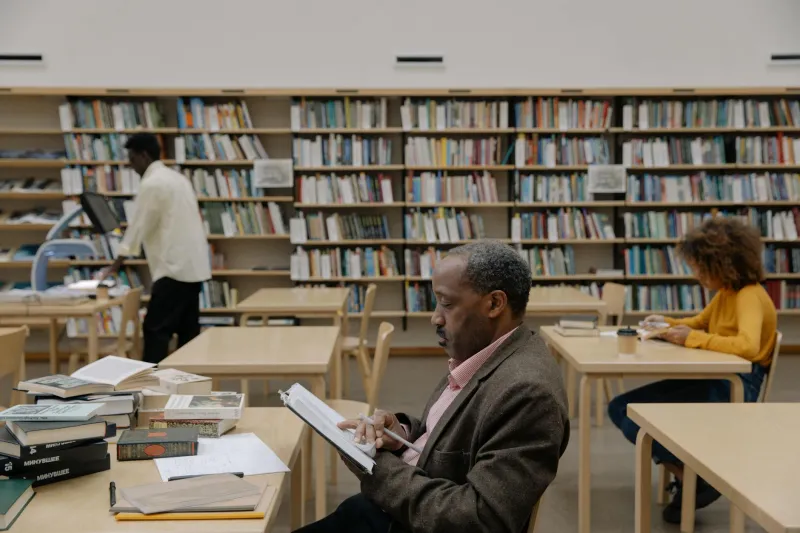
In 1962, if you wanted to settle an argument about the height of the Empire State Building, learn how to repair a carburetor, or discover what life was like in ancient Rome, you had one destination: the public library. Not just any library—your library, the one your taxes built and your neighbors used, staffed by someone who knew your name and remembered what you'd checked out last month.
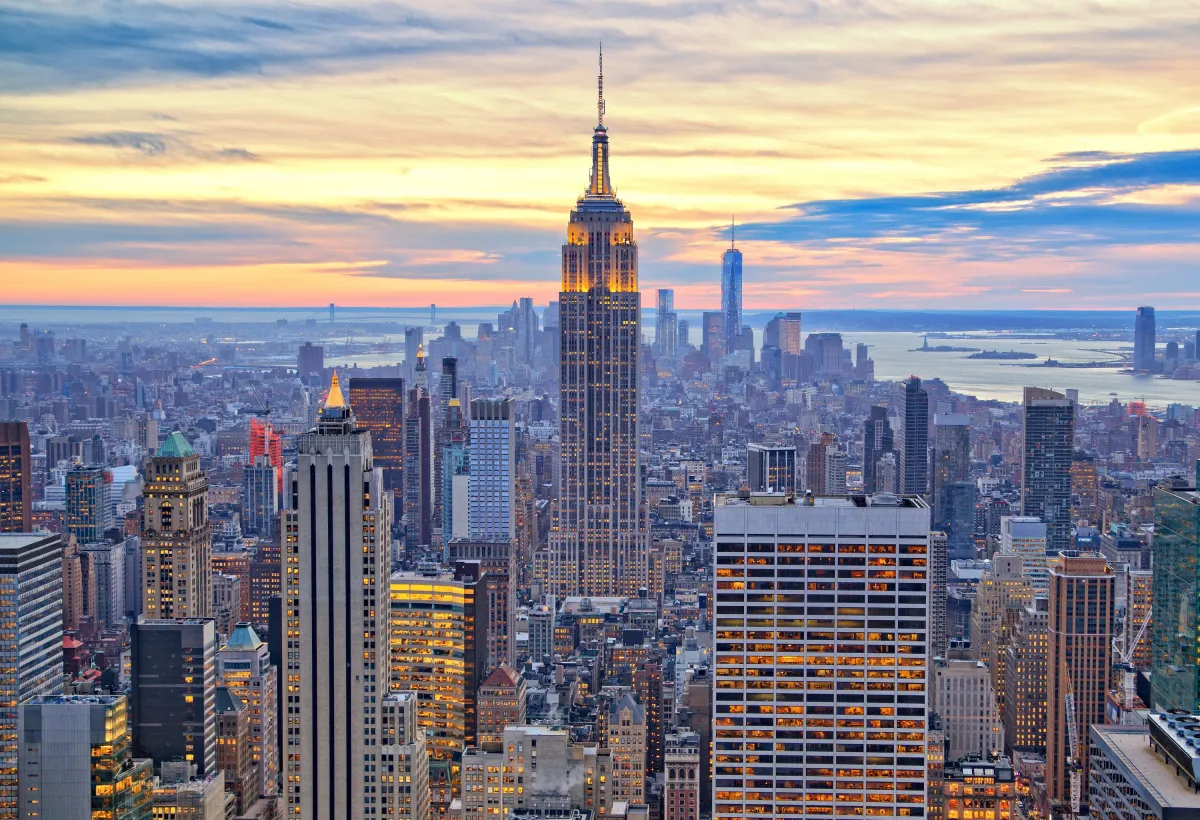 Photo: Empire State Building, via media.architecturaldigest.com
Today, that same information sits in your pocket, available instantly through a device more powerful than the computers that sent men to the moon. Yet something fundamental was lost in that transition from shared civic space to personalized screen—something about democracy, community, and the very nature of how Americans learned about their world.
The Great Equalizer
Walk into any American public library in 1955, and you'd witness something remarkable: the son of a factory worker sitting next to the daughter of a bank president, both reading the same encyclopedia, both with equal access to humanity's accumulated knowledge. The library didn't care about your family's income, your social status, or your educational background. Information was free, and freedom was information.
This wasn't just idealistic rhetoric—it was revolutionary social policy. Andrew Carnegie understood this when he funded over 2,500 libraries across America between 1883 and 1929. His libraries came with a condition: the community had to commit to funding the library's operations permanently. This wasn't charity; it was an investment in democratic participation.
The results were transformative. Immigrants learned English from library books. Farmers researched new agricultural techniques. Housewives discovered literature and history. Children from poor families gained access to the same educational resources as their wealthy classmates. The library served as America's unofficial university system, open to all.
More Than Books
The mid-century public library was the beating heart of civic life in ways that seem almost impossible today. Beyond books, libraries hosted community meetings, voter registration drives, and public forums. They provided free meeting spaces for local organizations, from garden clubs to civil rights groups.
Librarians weren't just book-keepers—they were information professionals, research specialists, and community advocates. They helped veterans navigate benefit applications, assisted job seekers with resume writing, and guided students through research projects. The reference desk was America's original search engine, powered by human expertise rather than algorithms.
Libraries also served as cultural centers. They hosted author readings, art exhibitions, and educational lectures. Many Americans encountered classical music, foreign films, and contemporary art for the first time in their local library. These institutions democratized culture just as effectively as they democratized information.
The Numbers Tell the Story
In 1960, the average American visited their public library 5.3 times per year. Children checked out an average of 23 books annually. Library circulation peaked in the early 1990s, when Americans borrowed over 2 billion items from public libraries—books, records, magazines, and early computer software.
More telling: in 1970, public libraries employed one librarian for every 2,100 Americans. Today, that ratio has dropped to one for every 3,400 Americans, despite population growth and increased demand for digital services. We've systematically defunded the very institutions that once guaranteed equal access to information.
The physical infrastructure tells a similar story. Between 1990 and 2010, America built more than twice as many new prisons as new libraries. We invested in containment rather than enlightenment, control rather than curiosity.
The Digital Disruption
The internet changed everything, but not in the ways early advocates predicted. Yes, information became instantly accessible, but it also became filtered, personalized, and commercialized. Google doesn't show everyone the same results—it shows you what its algorithm thinks you want to see, based on your location, search history, and demographic profile.
This personalization creates what researchers call "filter bubbles"—information environments that confirm existing beliefs rather than challenging them. The library's serendipitous discoveries—stumbling across an unexpected book while searching for something else—became algorithmic recommendations designed to keep you engaged rather than educated.
More problematically, internet access isn't equally distributed. While wealthy families upgraded to high-speed broadband, lower-income Americans increasingly relied on smartphones with limited data plans for internet access. The digital divide recreated the information inequality that public libraries had spent a century eliminating.
What Money Can't Buy
The library offered something that no digital platform can replicate: genuinely free access to information. No subscription fees, no data charges, no targeted advertising, no surveillance of your reading habits. You could spend eight hours researching any topic without anyone tracking your interests or selling your data to marketers.
This freedom had profound implications for democracy. Controversial topics could be researched without fear of government or corporate surveillance. Unpopular ideas could be explored without social media algorithms suppressing them. The library protected intellectual freedom in ways we didn't fully appreciate until we'd lost them.
Libraries also provided something else that's nearly extinct: quiet spaces for deep thinking. No notifications, no pop-up ads, no autoplay videos. Just silence, books, and the space to follow your thoughts wherever they led.
The Transformation
Today's public libraries are fighting for relevance in ways their predecessors never had to consider. They've become internet cafes for people who can't afford home broadband, homeless shelters for people with nowhere else to go during the day, and after-school programs for children whose parents work multiple jobs.
These are vital services, but they're also signs of social systems failing elsewhere. Libraries have become the safety net for problems they weren't designed to solve—digital inequality, homelessness, inadequate childcare. They're performing social work that other institutions have abandoned.
Meanwhile, their traditional role as knowledge democratizers has been largely forgotten. Most Americans under 30 have never experienced a library as a primary source of information. They've never felt the particular thrill of discovering exactly the book they needed, recommended by a librarian who understood their interests.
What We're Really Missing
The decline of the American public library represents more than just technological change—it's a retreat from the idea that knowledge should be a public good rather than a private commodity. We've traded shared civic institutions for personalized commercial services, democratic access for algorithmic efficiency.
The library was never just about books. It was about the radical idea that in a democracy, everyone deserves equal access to information, regardless of their ability to pay. It was about creating spaces where learning happened collectively, where ideas were shared rather than sold, where curiosity was cultivated rather than monetized.
We can Google anything now, but we've lost the guarantee that everyone else can Google the same things. We've gained convenience but sacrificed equality. We've optimized information delivery but forgotten why equal access to knowledge matters for democracy itself.
That's the real loss—not just books and quiet spaces, but the shared commitment to ensuring that every American, regardless of background or income, could walk into a building in their own community and emerge smarter, more informed, and more capable of participating in democratic life. The library was America's promise to itself that knowledge would never be the privilege of the few.
Today, that promise feels more fragile than ever.