When Sleep Was Sacred
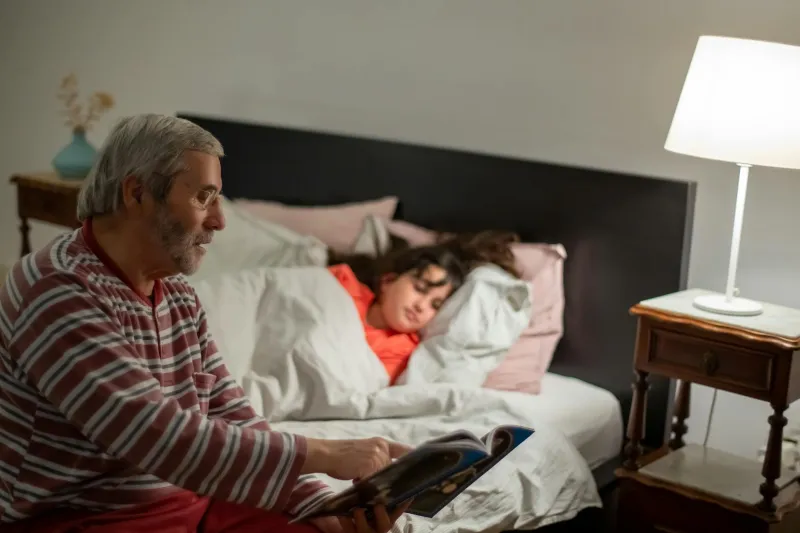
In 1946, the average American slept 8.2 hours per night. It wasn't considered lazy or unproductive—it was considered normal. Families went to bed when the sun went down (or shortly after), woke up when it rose, and didn't think twice about prioritizing rest over productivity.
Fast forward to today: the average American sleeps 6.8 hours per night, and we've somehow convinced ourselves this is not just acceptable, but admirable.
When did we decide that our grandparents' generation—the people who won World War II and built the modern economy—were doing it wrong?
 Photo: World War II, via image1.slideserve.com
The Bedtime That Moved Later and Later
In 1950, prime-time television ended at 10 PM because networks assumed families would want to go to bed. The test pattern came on, and America tucked itself in.
By the 1970s, late-night TV stretched until midnight. By the 1990s, cable channels ran 24/7. Today, Netflix asks if you're still watching at 2 AM, and somehow that became a reasonable question.
Our entertainment industry gradually trained us to stay awake longer, and we mistook this for progress.
When Tired Meant Time for Bed
Our great-grandparents had a simple relationship with fatigue: when you felt tired, you went to sleep. They didn't fight through it with caffeine, didn't wear exhaustion as a badge of honor, and didn't mistake sleepiness for weakness.
This wasn't because they were lazy—these were people who worked physical jobs, raised large families, and built the infrastructure of modern America. They just understood something we've forgotten: rest isn't the enemy of productivity; it's the foundation of it.
The Caffeine Revolution Nobody Talks About
In 1950, the average American consumed about 20 milligrams of caffeine per day—roughly a quarter cup of coffee. Today, we consume over 300 milligrams daily, equivalent to three full cups of coffee, and that's before counting energy drinks, pre-workout supplements, and caffeine-enhanced everything.
We didn't gradually develop a taste for coffee culture. We gradually developed a chemical dependency that masks our chronic sleep deprivation.
Our ancestors didn't need Starbucks on every corner because they weren't running on a sleep deficit that required pharmaceutical intervention.
When 9-to-5 Actually Meant 9-to-5
The forty-hour work week was designed around the assumption that workers needed time to rest, eat proper meals, and maintain relationships. When your grandfather left the office at 5 PM, work stayed at the office.
No emails waited on his nightstand. No urgent texts interrupted dinner. No conference calls invaded his weekend.
The boundaries between work and rest weren't just clearer—they were sacred. Violating them required an actual emergency, not just an impatient client or an ambitious boss.
The Humble Brag of Exhaustion
Somewhere in the last thirty years, America developed a peculiar form of social currency: competing over who's the most tired. "I only got four hours of sleep" became a way to signal importance and dedication rather than a concerning health issue.
Our grandparents would have been embarrassed to admit chronic sleep deprivation—it suggested you couldn't manage your life properly. Today, it suggests you're crushing it.
When Artificial Light Changed Everything
For most of human history, darkness meant bedtime. The invention of electric lighting didn't just extend our productive hours—it severed our connection to natural circadian rhythms that had governed human sleep for millennia.
But the real revolution came with screens. The blue light from televisions, computers, tablets, and smartphones doesn't just keep us entertained—it actively suppresses melatonin production, tricking our brains into thinking it's still daytime.
Our great-grandparents' bedrooms were dark caves. Ours are entertainment centers that happen to contain a bed.
The Shift Work Society
In 1950, most Americans worked during daylight hours because that's when businesses operated. The 24/7 economy was limited to essential services: hospitals, police, and fire departments.
Today, nearly 15 million Americans work non-traditional shifts, and businesses pride themselves on being "always open." We've created an economy that literally never sleeps, then wondered why we can't either.
The convenience of 24-hour everything came at the cost of 24-hour rest for someone.
When Kids Had Bedtimes (And So Did Adults)
Families in the 1950s had bedtime routines that applied to everyone, not just children. Parents didn't stay up until midnight scrolling through social media while their kids slept—the whole household wound down together.
This wasn't just about family values; it was about biological necessity. Without artificial stimulation, people naturally felt tired when darkness fell and alert when daylight returned.
Today's parents put their kids to bed at 8 PM, then immediately grab their phones for "just a few minutes" of screen time that stretches until midnight.
The Productivity Paradox
Despite sleeping less and working more hours, Americans aren't dramatically more productive than their well-rested grandparents. Studies show that sleep-deprived workers make more mistakes, take longer to complete tasks, and struggle with creative problem-solving.
We've confused being busy with being effective, and exhaustion with achievement.
Our ancestors understood something we've forgotten: a rested mind works better than a tired one, even if the tired mind puts in more hours.
The Medical Bill We're Still Paying
Chronic sleep deprivation isn't just about feeling tired—it's linked to obesity, diabetes, heart disease, depression, and shortened lifespan. The generation that fought for the eight-hour workday lived longer, healthier lives than we do, despite having less advanced medical care.
We've traded sleep for what we think is success, but we're paying for it with our health and, increasingly, our healthcare costs.
The Revolution We Need
The eight-hour sleep schedule wasn't just a nice idea—it was a hard-won labor victory that recognized human biological needs. Workers literally died fighting for the principle that life should include adequate rest.
Somewhere along the way, we gave up that victory voluntarily, convincing ourselves that sleep was for the weak and exhaustion was for the strong.
Maybe it's time to remember what our grandparents knew: that being well-rested isn't lazy—it's human.