Walter Cronkite Signed Off. Then Everything Changed About How America Gets the News.
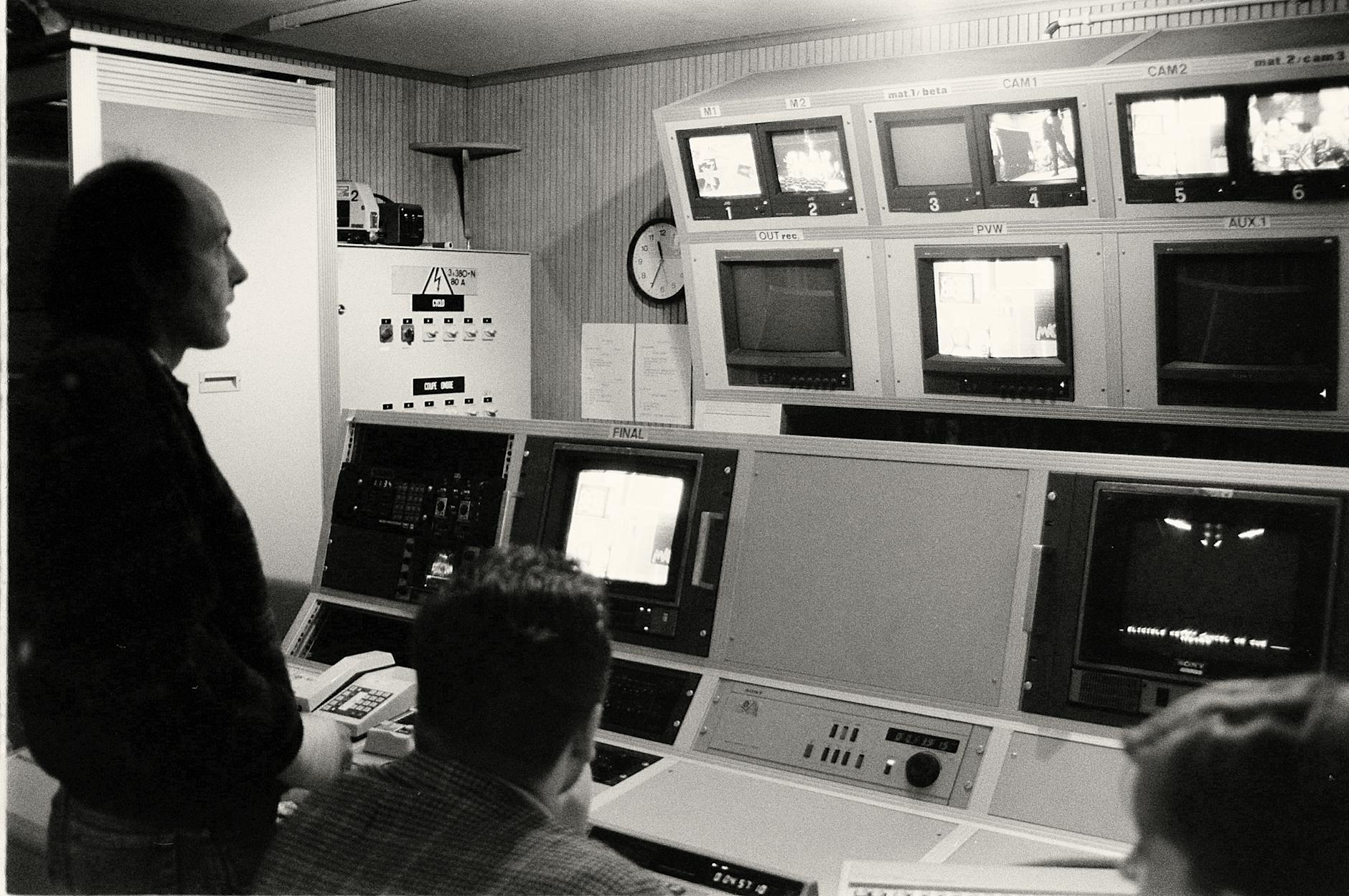
Walter Cronkite Signed Off. Then Everything Changed About How America Gets the News.
On March 6, 1981, Walter Cronkite delivered his final broadcast as anchor of the CBS Evening News. "And that's the way it is," he said, as he always did. Then he handed the desk to Dan Rather, and an era ended.
At the time, nobody quite understood how much was ending with it.
Cronkite's audience on any given night numbered around 20 million viewers — a figure that represented not just popularity, but something closer to a shared national experience. In a country of 226 million people, one in nine was watching the same man deliver the same information at the same time. That kind of collective attention is almost impossible to imagine today.
The Three-Network World
To understand how Americans consumed news in the 1960s and 70s, you have to start with the sheer narrowness of the media landscape.
There were three major television networks: ABC, CBS, and NBC. Each aired a nightly newscast, typically 30 minutes long, in the early evening. Before that, Americans had newspapers — morning and afternoon editions in most cities — and radio. That was essentially it.
The structure created something remarkable almost by accident: a shared information baseline. When Cronkite reported that the Vietnam War was unwinnable in his famous 1968 editorial, President Lyndon Johnson reportedly said, "If I've lost Cronkite, I've lost Middle America." That reaction made sense in a world where Cronkite was, for millions of Americans, the most trusted voice in journalism.
The anchors of that era operated under constraints that shaped the product significantly. The FCC's Fairness Doctrine, in effect until 1987, required broadcasters to present controversial public issues in a balanced way. Broadcast licenses depended on serving the "public interest." News divisions at the major networks were often treated as prestige operations — not expected to generate profit, but expected to maintain credibility.
None of that made the news perfect. Blind spots were real and significant — coverage of civil rights, women's issues, and communities outside major cities was often inadequate or outright poor. But the structural incentives pushed toward a certain kind of gravity and restraint.
Cable Breaks the Dam
CNN launched on June 1, 1980 — a full year before Cronkite's farewell — and almost nobody took it seriously at first. Ted Turner's idea of a 24-hour news channel was widely mocked as "Chicken Noodle News" in industry circles.
But the Gulf War in 1991 changed everything. CNN's live coverage from Baghdad, with Peter Arnett reporting as bombs fell, drew audiences that the traditional networks couldn't match for breaking news. Suddenly, the 24-hour format wasn't a curiosity — it was the future.
The problem the format created was structural and almost inevitable: a 24-hour news cycle requires content to fill it, even when the actual news of the day doesn't. The result was a gradual shift toward commentary, analysis, debate, and conflict — formats that are cheaper to produce and more reliably engaging than straight reporting. The line between news and opinion began to blur, slowly at first, then all at once.
Fox News launched in 1996, MSNBC the same year. Each found a distinct audience and, critics would argue, helped pioneer a model where news organizations oriented themselves toward a particular viewer's existing worldview rather than trying to reach everyone.
The Internet Doesn't Just Change Delivery — It Changes Everything
If cable news blurred the line between information and opinion, the internet effectively dissolved it.
In the early 2000s, blogs emerged as a new kind of commentary — fast, personal, and operating outside the institutional structures of traditional media. The 2004 election cycle was the first in which online media played a genuinely significant role. By 2008, social platforms were beginning to reshape how stories spread.
By the 2010s, Facebook had become, whether it intended to or not, one of the most powerful news distribution systems in American history. The algorithmic feed — designed to surface content that generated engagement — turned out to have a pronounced appetite for content that triggered strong emotions. Outrage, fear, and tribal affirmation spread faster than measured reporting.
Twitter (now X) created a news environment where speed was prized above almost everything else. Being first mattered more than being thorough. Corrections happened after the fact, if at all, and often reached a fraction of the audience that the original claim had.
Podcasts added another layer — long-form audio that could reach highly specific audiences with content that ranged from rigorous journalism to barely filtered opinion, often with no clear signal to listeners about which they were getting.
What's Actually Different Now
The changes aren't just about technology or delivery format. Something more fundamental shifted.
In the network era, the news was an event. It happened at a specific time, it ended, and then it was over until the next day. That structure imposed a kind of natural rhythm on how people engaged with current events.
Today, the news is a continuous environment. It doesn't start or stop. Notifications arrive at all hours. The algorithm surfaces stories based on what you've previously engaged with, which means two people living in the same city can have almost entirely different pictures of what's happening in the world.
Public trust in media has dropped sharply. Gallup polling shows that American confidence in newspapers and television news has been declining for decades, reaching historic lows in recent years. That decline reflects real failures by news organizations — but it also reflects a fragmented landscape where the very concept of a shared authoritative source has become harder to sustain.
Then & Now
Walter Cronkite signed off 44 years ago. In that time, the way Americans encounter information has been remade not once but several times over.
The old model had real limitations — gatekeeping, blind spots, and a narrowness of perspective that often went unexamined. The new model has brought genuine benefits: more voices, more access, more speed, and the ability for stories that once went untold to find massive audiences.
But something was also lost in the transition. The idea that a nation could gather, more or less together, around the same set of established facts — that turns out to have been more valuable, and more fragile, than anyone fully appreciated while it lasted.