The Rhythm of Familiar Footsteps
Every Tuesday at 6 AM, Mrs. Henderson would leave two empty milk bottles on her front porch and retrieve two full ones, still cold from the dairy. The milkman, Frank, knew she preferred whole milk and would occasionally leave a small container of heavy cream when strawberries were in season. He also knew to check on her if the bottles weren't retrieved by noon — she'd fallen once, and he'd been the one to call for help.
This wasn't unusual customer service. It was just Tuesday in 1955.
Today, Mrs. Henderson's granddaughter orders groceries through an app, receives a text when they're delivered, and might never see the person who brought them. The efficiency is remarkable, but something essential has been lost in translation: the web of human connections that once bound American neighborhoods together through the simple act of daily commerce.
The Invisible Infrastructure of Care
Mid-century American neighborhoods operated on a network of service relationships that created community as a byproduct of commerce. The milkman didn't just deliver dairy products; he became an informal neighborhood watchman, checking on elderly customers and noticing when something seemed off. The mailman knew which houses had new babies (from the sudden influx of congratulation cards) and which had teenagers away at college (from the care packages being sent).
The iceman, coalman, and various door-to-door vendors — from the Fuller Brush man to the Watkins spice salesman — created a rhythm of expected interactions that made neighborhoods feel alive and connected. These weren't deep friendships, but they were real relationships built on familiarity, reliability, and mutual recognition.
These service workers learned the patterns of daily life on their routes. They knew which houses had shift workers who needed quiet deliveries, which had dogs that barked, and which had children who would run out to greet them. They adapted their service to fit the rhythms of each household, creating personalized experiences without algorithms or customer profiles.
When Service Had a First Name
The personal nature of these interactions extended beyond mere familiarity. Service workers often became trusted advisors and informal community connectors. The mailman might mention that the Johnsons were looking for someone to watch their cat while they visited relatives, leading to a neighbor connection that wouldn't have happened otherwise.
During the Great Depression and World War II, these relationships took on even greater significance. Milkmen extended credit to struggling families. Mail carriers delivered more than letters — they carried news, messages, and sometimes small favors between neighbors. The ice delivery became a social event for children on hot summer days.
These workers possessed institutional knowledge about their routes that went far beyond logistics. They knew the elderly widow who always had fresh cookies to share, the family that bred prize-winning roses, and the veteran who liked to chat about his service. This knowledge made them valuable community resources in ways that had nothing to do with their official job descriptions.
The Efficiency Revolution
The transition away from this personal service model didn't happen overnight, but the forces driving change were powerful: cost reduction, efficiency improvements, and changing consumer expectations. Self-service supermarkets eliminated the need for home delivery of many goods. Refrigeration technology reduced dependence on frequent ice and milk deliveries. Two-income households meant fewer people were home during traditional delivery hours.
The U.S. Postal Service gradually reduced delivery frequency and personal interaction as mail volume changed and efficiency became paramount. Private delivery services focused on speed and reliability rather than relationship-building. The rise of suburban shopping centers and later big-box retailers shifted commerce away from neighborhood-based services.
Each change made logical economic sense, but the cumulative effect was the dismantling of a social infrastructure that had existed for generations. The corner grocery store that knew your family's preferences gave way to supermarket chains that offered more choices but less personal connection.
The Algorithm Knows Your Address, Not Your Name
Today's delivery ecosystem is a marvel of technological efficiency. Apps track packages in real-time, optimize routes automatically, and predict delivery windows with increasing accuracy. Drones and robots promise to make the process even more efficient by removing human workers entirely from the equation.
Modern delivery drivers handle many more stops per day than their predecessors, covering larger geographic areas with less time for personal interaction. They're measured on speed and accuracy rather than customer relationships. The gig economy model that powers much of today's delivery system incentivizes efficiency over familiarity — drivers work for multiple platforms and rarely develop consistent routes.
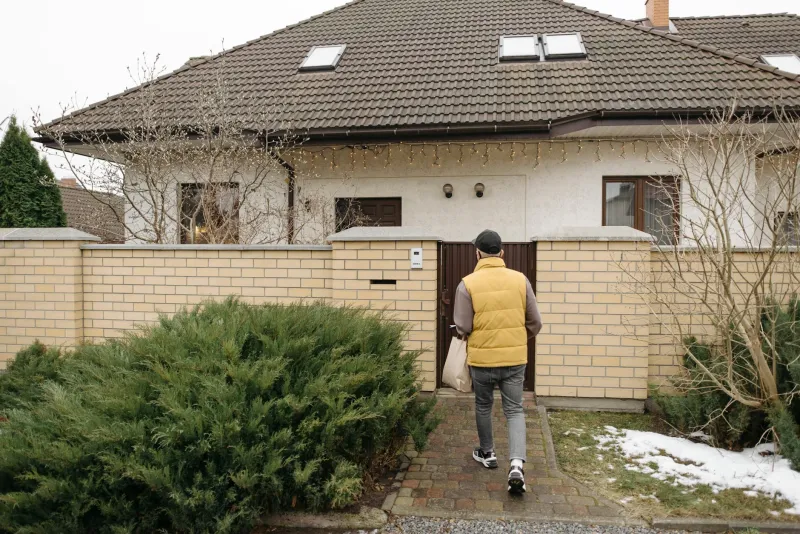
Contactless delivery, accelerated by the pandemic but now normalized, represents the logical endpoint of this efficiency-focused approach. Packages appear on doorsteps as if by magic, ordered through apps and delivered by people customers never see. The interaction has been reduced to its purely transactional essence.
What We Gained and What We Lost
The modern system offers undeniable advantages: convenience, choice, speed, and often lower costs. You can order almost anything and have it delivered within hours, sometimes minutes. The selection available through online platforms dwarfs what any neighborhood service network could provide.
For people with mobility limitations, social anxiety, or demanding schedules, today's delivery options provide access and flexibility that the old system couldn't match. The efficiency gains have made many goods more affordable and accessible to broader populations.
But the social costs are harder to quantify and easier to dismiss. The loss of routine human interaction has contributed to the isolation that many Americans report feeling, especially among elderly populations who remember when service relationships provided regular social contact. The absence of familiar faces on neighborhood streets has made communities feel less connected and less safe.
The Invisible Safety Net
Perhaps most significantly, we've lost an informal safety net that operated through these service relationships. The milkman who noticed unchanged bottles, the mailman who saw mail piling up, the delivery person who knew when someone seemed unwell — these interactions provided a layer of community care that didn't depend on formal social services.
In an era of increasing social isolation, especially among elderly Americans, the absence of these regular check-ins has real consequences. Family members living far away once relied on service workers to provide informal updates on aging relatives. Neighbors once learned about each other's needs through conversations with shared service providers.
The efficiency of modern delivery systems eliminates these "inefficiencies" of human interaction, but those inefficiencies served important social functions that we're still learning to replace through formal programs and technological solutions.
Echoes of the Old System
Interestingly, some modern services are rediscovering the value of personal relationships. Local CSA programs, boutique delivery services, and neighborhood-focused apps are experimenting with models that combine modern efficiency with personal connection. Some delivery drivers for major platforms develop regular relationships with customers, recreating elements of the old system within new constraints.
The success of services like local farm boxes and artisanal food deliveries suggests that some consumers are willing to pay premium prices for more personal service relationships. These services often emphasize knowing their customers, customizing deliveries, and building community connections — values that echo the service model we moved away from decades ago.
The challenge is scaling these personalized approaches while maintaining the efficiency and affordability that modern consumers expect. The old system worked partly because it was simpler — fewer choices, slower pace, different economic pressures. Recreating the social benefits within today's complex, fast-moving economy requires intentional design rather than natural evolution.
We may never return to the era when the milkman knew your family's schedule and the mailman doubled as a neighborhood information hub. But understanding what we lost when we optimized those relationships away might help us design delivery systems that serve not just our material needs, but our human ones as well.