Going to the Movies Used to Mean Something. Now It's Just Content You Forgot to Watch.
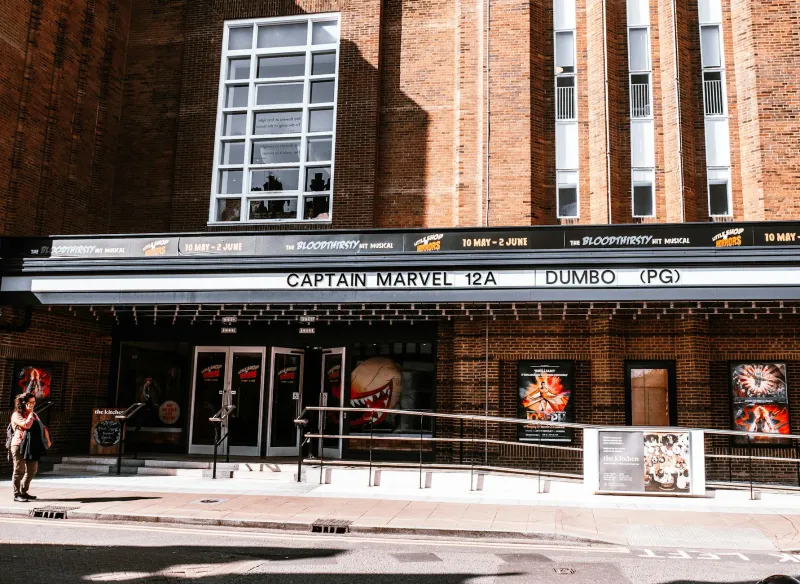
Going to the Movies Used to Mean Something. Now It's Just Content You Forgot to Watch.
In 1975, a Friday night at the movies was an event. You decided what you were going to see, sometimes days in advance. You dressed up a little—not a lot, but a little. You bought tickets at a window, often waiting in line. You arrived early enough to get good seats and buy overpriced popcorn. You sat in a theater with 200 strangers in the dark, and for two hours, you experienced a story together. When it ended, you filed out, and you'd discuss it on the drive home, maybe for days afterward.
It was a shared cultural moment. Everyone saw the same movie at roughly the same time. You could reference it in conversation and know that most people in the room would get the reference.
Today, you open your streaming app, scroll past 40 titles you've already decided not to watch, find something that looks vaguely interesting, watch 20 minutes while checking your phone, and either continue it later or abandon it entirely. You might finish it in three separate sessions over two weeks. Your partner might not watch it at all. When you finally finish, nobody cares because they're all watching different things anyway.
The movie itself hasn't changed much. The technology is arguably better. But what it means to watch a movie has been fundamentally transformed.
The Grand Theater and the Drive-In Era
For most of the 20th century, the movie theater was a destination in itself. Multiplexes didn't exist yet. A theater was a singular place, often architecturally impressive. Movie palaces in the 1920s and 1930s had ornate lobbies, crystal chandeliers, and velvet seats. Going to the movies was aspirational. It was a night out, a form of entertainment that required leaving your house and spending money.
This scarcity gave cinema cultural weight. There were only so many movies released each year. If you wanted to see something, you had a limited window to do so. You couldn't rewatch it whenever you wanted. You couldn't pause it and come back later. You experienced it fully, in a dedicated space, with no distractions.
The drive-in theater, which peaked in the 1950s and 1960s, was cinema's last gasp as a communal experience. Families would drive there, park, and watch a movie under the stars. It was still an event, still something you planned. The fact that you could bring your own snacks and watch in your car didn't diminish the ritualistic nature of it.
But drive-ins required space and infrastructure. As suburban sprawl intensified and land became more valuable, drive-ins disappeared. By the 1980s, they were mostly gone. The movie theater experience had already been standardized into the multiplex—efficient, standardized, and somewhat soulless, but still a destination.
VHS and the Democratization of Boredom
The VCR changed everything, but not immediately. For the first time, you could own a movie. You could watch it whenever you wanted. This was revolutionary. But it also required intentionality. You had to go to a store, rent or buy a tape, bring it home, and actually watch it. The friction was lower than going to a theater, but it still existed.
The cultural effect was significant but gradual. Movies were no longer a shared experience because they were no longer time-locked. You could watch a movie three years after it came out. Your friends could have watched it two years before you. The synchronized cultural moment that used to exist around major releases started to fragment.
But VHS still required you to choose. You had maybe 500 movies available at a Blockbuster. You had to walk through the aisles, look at the covers, and make a decision. This curation—by the store, by the limited selection—actually made the choice easier. You rented something, brought it home, and watched it because you'd committed to it.
The Streaming Abundance Trap
Streaming removed the last friction. Now you have access to 10,000 titles instantly. You don't have to go anywhere. You don't have to commit to anything. You can start something and stop it with no consequence.
This should be liberating. But abundance creates a different kind of paralysis. With unlimited options, the decision-making cost increases. You spend 30 minutes scrolling, unable to choose, and then you just watch something you've seen before. Or you start something, lose interest, and move on to something else.
The cultural consequence is profound. There's no longer a shared movie experience. When a new Marvel film comes out, some people see it in theaters, some watch it on streaming weeks later, some never watch it at all. There's no collective moment where everyone sees the same thing. The water-cooler effect has dissolved.
Movies are now competing for attention with everything else—social media, video games, television, podcasts. They're not special. They're just another form of content, and they're losing the competition for your time and attention.
The Death of the Ritual
What's been lost is the ritual. The ritual of planning a night out, getting ready, driving to the theater, waiting in line, sitting in the dark with strangers, experiencing a story together, and then discussing it afterward. This ritual had value beyond just watching the movie. It was a break from routine. It was a social event. It was a cultural synchronization point.
Streaming has atomized this. Everyone watches different things, at different times, alone. There's no shared moment. There's no cultural reference that everyone gets. Entertainment has become completely individualized and on-demand.
The irony is that this should make movies better, not worse. With unlimited access, you'd think we'd be watching more films, more diverse films, more challenging films. Instead, we're watching less. The average person watches fewer complete films per year than they did in the 1990s, despite having access to infinitely more content.
The problem is that content without context, without ritual, without scarcity, has less value. A movie you can watch anytime feels less urgent than a movie with a limited theatrical run. A movie you watch alone on your couch feels less significant than a movie you went out to experience. A movie that's one of 10,000 options feels less important than a movie that was one of a handful of releases that month.
The Theater's Last Stand
Movie theaters haven't disappeared, but they've become niche. They're where you go for spectacle—superhero movies, action films, horror movies that benefit from the big screen and the communal fear. They're where you go for events. But for most movies, for most people, the theater feels optional.
The pandemic accelerated this shift. Once people got used to watching new releases at home, the motivation to go to a theater declined. The theatrical window shrunk. Studios started releasing movies directly to streaming. The distinction between a "movie" and "content" blurred completely.
What we've gained is convenience and choice. What we've lost is the shared cultural experience and the sense that going to the movies meant something. Movies are now just another thing you consume, often half-attentively, while doing something else.
The Arithmetic of Atomization
The shift from cinema as event to cinema as content happened in less than 40 years. In 1985, most Americans went to movie theaters regularly. It was a standard form of entertainment. By 2024, theatrical attendance is a quarter of what it was, and many of the people who do go are seeing superhero movies, not films.
We've traded the scarcity and ritual of cinema for the abundance and convenience of streaming. We've gained the ability to watch anything anytime. We've lost the shared moment, the cultural synchronization, and the sense that watching a movie was something worth planning for.
It's not clear we made the right trade. But it's impossible to go back. The ritual is gone. The event is gone. All that's left is content, and there's always more of it than you'll ever get around to watching.