Seven AM Sharp: When Every Kid in America Watched the Same Thing
The Sacred Hour That Defined Childhood
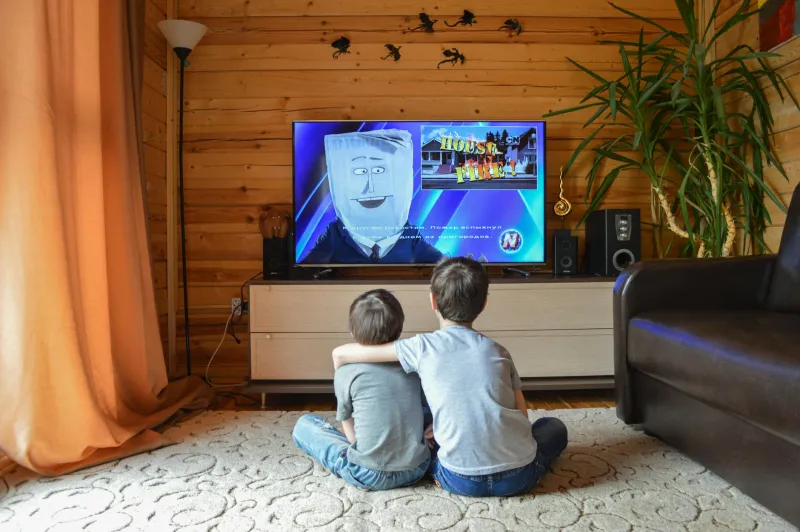
Every Saturday morning from 1966 to 1996, something magical happened across America. At exactly 7 AM, millions of children would plant themselves in front of television sets, bowls of sugary cereal in hand, ready for four hours of pure animated bliss. The networks had created something unprecedented: a shared childhood experience that transcended geography, income, and background.
This wasn't just television programming. It was a cultural institution as reliable as Sunday church or Friday night football. ABC, CBS, and NBC competed fiercely for young eyeballs, crafting elaborate cartoon lineups that would become the soundtrack to American childhood. Scooby-Doo, The Smurfs, Schoolhouse Rock, and dozens of other animated series created a common language that connected kids from Maine to California.
The Golden Formula
The Saturday morning cartoon block wasn't an accident. It was the result of careful programming strategy that began in the mid-1960s when networks realized children represented an untapped audience with significant influence over household spending. By the 1970s, Saturday morning had evolved into a sophisticated entertainment machine.
Networks would spend months crafting the perfect lineup, balancing action shows with educational content, mixing familiar characters with bold new concepts. Shows like "Fat Albert and the Cosby Kids" delivered life lessons wrapped in humor, while "Superfriends" offered superhero adventures that felt both thrilling and safe. The programming was appointment television in its purest form – miss Saturday morning, and you'd have to wait an entire week for another chance.
Parents appreciated the predictable schedule that gave them a few precious hours of quiet weekend time. Children treasured the ritual itself – the early wake-up, the race to claim the best spot on the living room floor, the shared excitement when a favorite show's theme song began. It was childhood distilled into four perfect hours.
When Everything Changed
The death of Saturday morning cartoons didn't happen overnight, but when it came, it was swift and decisive. Three forces converged in the 1990s to destroy a tradition that had seemed unshakeable.
First, the Children's Television Act of 1990 required networks to provide educational programming for kids. What seemed like a reasonable mandate actually made Saturday morning cartoons financially unviable. Networks could no longer rely on pure entertainment; they had to justify every show's educational value, adding layers of complexity and cost to programming decisions.
Second, cable television exploded. Nickelodeon launched in 1979, followed by Disney Channel in 1983 and Cartoon Network in 1992. Suddenly, children had access to cartoons 24 hours a day, seven days a week. Why wait for Saturday morning when you could watch cartoons after school, before dinner, or even late at night?
Third, home video and later DVD technology gave families unprecedented control over their viewing experience. Parents could buy their children's favorite shows and play them whenever convenient. The appointment television model began to crumble as on-demand entertainment became the new normal.
The Last Saturday Morning
By the mid-1990s, the writing was on the wall. Ratings for Saturday morning programming plummeted as children migrated to cable channels and home video. In 1996, NBC became the first major network to abandon Saturday morning cartoons entirely, replacing them with a live-action teen programming block.
CBS followed suit in 2013, and ABC held out until 2014 before finally surrendering the time slot to educational programming produced by Litton Entertainment. The era was officially over. After nearly fifty years, American children would no longer share the experience of Saturday morning cartoons.
What We Lost in Translation
The shift from scheduled programming to on-demand entertainment seems like obvious progress. Children today have access to more content than their parents could have imagined, available instantly on multiple devices. Quality has improved dramatically – modern children's programming is more diverse, more educational, and more visually sophisticated than the cartoons of the 1970s and 1980s.
But something intangible was lost in the transition. Saturday morning cartoons created a shared cultural experience that connected children across the country. Kids who grew up in different decades could bond over memories of "Schoolhouse Rock" songs or debate the merits of various superhero teams. The common references, the collective nostalgia, the understanding that every American child had participated in the same weekly ritual – all of that disappeared when entertainment became individualized.
The Algorithm vs. The Schedule
Today's children navigate entertainment landscapes curated by algorithms rather than network programmers. Netflix suggests content based on viewing history. YouTube serves up an endless stream of videos tailored to individual preferences. Even Disney+ organizes content by age and interest rather than by schedule.
This personalized approach delivers exactly what each child wants to watch, when they want to watch it. But it also means that two eight-year-olds living next door to each other might have completely different entertainment experiences. The shared childhood culture that Saturday morning cartoons created has been replaced by millions of individual viewing experiences.
The End of Appointment Childhood
The disappearance of Saturday morning cartoons reflects a broader transformation in how American children experience entertainment and, by extension, childhood itself. We've traded the anticipation of waiting for favorite shows, the joy of shared cultural moments, and the simple pleasure of appointment television for the convenience of unlimited access and personalized content.
Whether this represents progress or loss depends on perspective. But for the millions of Americans who remember rushing to the television set every Saturday morning, cereal bowl in hand, the end of that era marked the close of a uniquely communal chapter in American childhood – one that will never return.