Six O'Clock Sharp: How America Lost Its Most Sacred Hour
Six O'Clock Sharp: How America Lost Its Most Sacred Hour
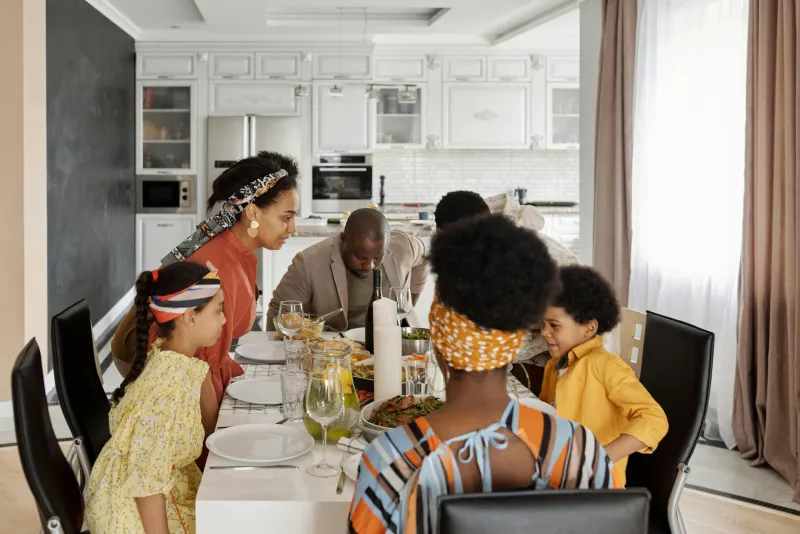
In 1955, if you walked through any American neighborhood at 6 PM, you'd hear the same sound echoing from house after house: the clink of silverware against plates, muffled conversations, and the occasional "pass the potatoes." The family dinner wasn't just a meal—it was the gravitational center around which everything else orbited.
Mom started cooking at 4:30. Dad walked through the door at 5:45. Kids knew better than to be anywhere else when that dinner bell rang. It wasn't negotiable. It was just how families worked.
Today, that scene feels almost quaint. The average American family sits down together for dinner just three times a week, and even then, it's often interrupted by phones, homework, or someone running late from soccer practice.
When Dinner Was the Main Event
The post-war American dinner table operated on a schedule that seems almost militaristic by today's standards. Fathers worked traditional hours and came home expecting dinner to be ready. Mothers planned their entire day around that 6 PM deadline. Children understood that dinner time was family time—no friends, no activities, no excuses.
This wasn't just about food. The dinner table was where families processed their day, where parents checked in on their children's lives, and where kids learned social skills they couldn't pick up anywhere else. You learned to wait your turn to speak, to ask politely for seconds, and to sit still even when you were bored.
The meal itself was substantial: pot roast, meatloaf, casseroles that could feed an army. Everything was made from scratch because there weren't many alternatives. Fast food existed, but it was a rare treat, not a Tuesday night solution.
Restaurants were special occasion destinations. A family might go out to eat once a month, if that. The idea of grabbing dinner on the way home from work would have seemed both extravagant and lazy.
The Slow Unraveling
The changes didn't happen overnight. They crept in gradually, each one seeming reasonable on its own.
First came longer work hours and more complex schedules. As more mothers entered the workforce in the 1970s and 80s, coordinating everyone's schedule became a logistical puzzle. The rigid 6 PM dinner gave way to "whenever everyone gets home."
Then convenience foods arrived in earnest. Microwave ovens, introduced in the 1970s, promised to make cooking faster and easier. Frozen dinners evolved from novelty items to legitimate meal solutions. Drive-through windows multiplied. Suddenly, feeding a family didn't require hours of preparation.
Children's schedules exploded with activities. Soccer practice, piano lessons, dance classes, tutoring—the after-school hours that once led naturally to the dinner table became a frantic shuttle between commitments.
Television moved from the living room to everywhere. Families began eating in front of screens, first gathered around one TV, then scattered to individual devices.
The Numbers Tell the Story
In 1960, nearly 90% of American families ate dinner together most nights of the week. By 2010, that number had dropped to less than 60%. Today, it's even lower.
The average American family spends about 37 minutes together during meals each day—and that includes breakfast and lunch. Compare that to the 1950s, when dinner alone typically lasted 45 minutes to an hour.
Restaurant spending tells another part of the story. In 1955, Americans spent about 25% of their food budget eating out. Today, it's over 50%. We're not just eating differently at home—we're eating at home less often.
What We Traded Away
The efficiency gains are undeniable. Modern families can grab dinner in 10 minutes instead of spending an hour at the table. Parents can accommodate complex schedules without the rigid structure that once defined family life. Children can pursue more activities and interests than ever before.
But something was lost in the translation. Child development experts point to family meals as crucial for language development, emotional regulation, and social skills. Kids who regularly eat with their families perform better in school, have lower rates of depression and anxiety, and are less likely to engage in risky behaviors.
The dinner table was also where families developed their own culture. Inside jokes, family stories, and traditions were passed down between the salad course and dessert. Without that regular gathering point, families often struggle to maintain those connections.
The Modern Dinner Dilemma
Today's families face a paradox. We have more food options, more convenience, and more flexibility than any generation in history. Yet many parents report feeling stressed about feeding their families and guilty about not eating together more often.
The solutions we've created—meal kits, food delivery apps, grab-and-go options—solve the logistical challenges but can't replicate what made those old family dinners special: the simple act of sitting together, without distractions, sharing both food and conversation.
Some families are trying to recreate that ritual in new forms. Sunday brunch, Saturday morning pancakes, or even 15-minute check-ins over takeout. It's not the same as the nightly gathering that once anchored American family life, but it's an attempt to preserve something essential that got lost in the rush toward convenience.
The family dinner table didn't just disappear—we chose efficiency over ritual, convenience over connection. Whether that trade-off was worth it depends on what you think dinnertime was really about in the first place.