The Counter That Connected Us All
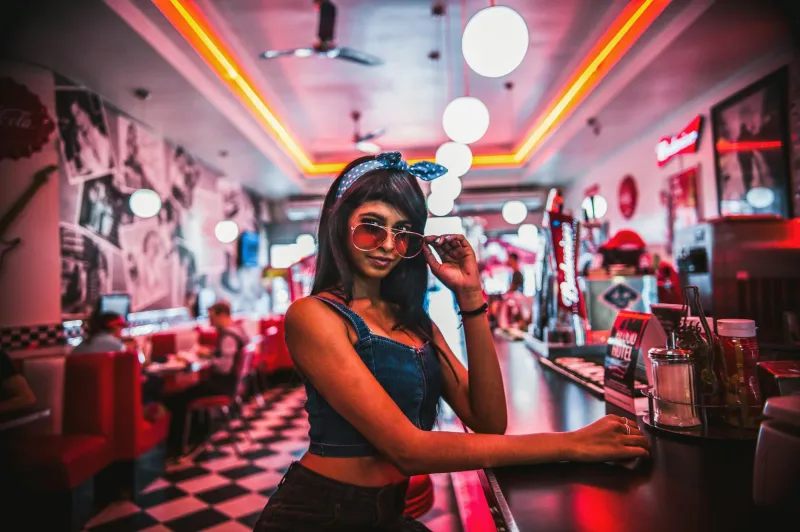
Walk into any surviving American diner today, and you'll notice something strange: most of the counter stools sit empty. Those red vinyl seats that once buzzed with conversation now face a largely silent coffee pot, while customers huddle in booths with their phones or grab their orders to-go.
It's hard to imagine now, but that lunch counter was once the beating heart of American democracy — a place where the mechanic from down the street shared elbow room with the bank manager, where the night shift nurse grabbed breakfast next to the traveling salesman, and where everyone paid 85 cents for the same blue plate special.
When Eating Out Meant Eating Together
In the 1950s and 60s, the American diner wasn't just a restaurant — it was a social institution. The lunch counter, in particular, served as an accidental equalizer in ways that seem almost revolutionary by today's standards. There were no VIP sections, no premium seating, no app-based ordering systems to maintain distance between customers and staff.
You sat where there was space, struck up conversations with whoever landed on the adjacent stool, and ate food prepared by someone who probably knew your usual order after three visits. The waitress — and it was almost always a woman — called you "hon" whether you were the town doctor or worked the loading dock at the factory.
The menu was straightforward: meatloaf, mashed potatoes, apple pie, coffee that never ran empty. Prices were posted on boards behind the counter, and they were the same for everyone. No surge pricing, no delivery fees, no premium for customization. A cup of coffee cost a dime, and it came with unlimited refills and usually unsolicited conversation from your neighbor.
The Great Fragmentation
Somewhere between then and now, American eating fractured into a thousand pieces. The rise of fast-casual chains promised better ingredients but delivered standardized experiences in sterile environments. Food delivery apps offered convenience but eliminated the human element entirely. The $18 artisanal sandwich became normal, while the simple pleasure of affordable communal dining became a relic.
Today's food landscape offers more choices than any generation in history, yet somehow feels less nourishing. We optimize for efficiency, customization, and Instagram-worthy presentation, but we've lost something harder to quantify: the accidental community that formed when strangers shared a meal at a common counter.
The modern equivalent might be the food court or coffee shop, but even these spaces feel different. People arrive with earbuds in, laptops open, carefully maintaining their personal bubbles. The idea of turning to a stranger and commenting on the weather or the baseball game feels almost transgressive now.
More Than Just a Meal
What made the classic diner counter special wasn't the food — though a well-made burger and fries certainly had their charm. It was the unscripted human interaction that happened when Americans from different walks of life found themselves in the same place, eating the same food, for the same price.
These weren't deep friendships being formed over coffee and pie, but they were real human connections. The kind of casual familiarity that builds community one conversation at a time. The traveling salesman learned about local road conditions from the trucker. The teacher heard about job openings from the factory supervisor. The elderly regular got checked on by the waitress who noticed when they didn't show up for their usual Tuesday breakfast.
The Price of Convenience
Our current food system offers undeniable advantages: more variety, faster service, dietary accommodations that would have been impossible in the diner era. You can have Thai food delivered to your door at midnight or grab a gluten-free, plant-based meal between meetings.
But we've traded something significant for all that convenience and choice. We've professionalized hospitality to the point where it often feels impersonal. We've optimized efficiency so thoroughly that there's no time for the small talk that once made strangers feel like neighbors.
The diner counter forced a kind of gentle social interaction that our current food culture actively discourages. When you're sitting shoulder-to-shoulder with someone for twenty minutes, sharing the same pot of coffee and listening to the same radio program, conversation becomes natural. When you're eating alone at your desk while scrolling through your phone, community becomes optional — and therefore rare.
What We Lost When We Stopped Sharing a Counter
The death of the lunch counter represents more than just changing dining habits — it reflects a broader shift toward isolation and self-selection in American life. We can now curate our experiences so precisely that we rarely encounter people outside our chosen circles. Our food comes from apps that know our preferences, delivered by people we never see, eaten in spaces we control completely.
There's comfort in that control, but there's also loss. The diner counter was messy and unpredictable in ways that could be annoying — the chatty regular who wouldn't stop talking, the coffee that was too strong, the pie that was sometimes gone by the time you wanted it. But that messiness was also where community happened, in the small frictions and unexpected pleasures of sharing space with strangers who weren't really strangers for long.
The few remaining diners with active lunch counters feel like time capsules now, preserving a way of eating — and being with each other — that once seemed as permanent as the chrome fixtures themselves. They remind us that there was a time when Americans regularly broke bread with people they might never see again, and somehow that made both the food and the community a little richer.