Every summer morning in 1975, the neighborhood kids knew the drill. Grab your glove, meet at the vacant lot behind Miller's grocery store, and play ball until someone's mom hollered for dinner. No coaches, no uniforms, no schedules. Just kids, a beat-up baseball, and the kind of endless summer day that seemed to stretch into forever.
 Photo: Miller's grocery store, via heartlandenergy.com
Tommy Chen was usually the first to arrive, lugging the backstop made from his dad's old fishing net. Sarah Williams brought the bases — four pieces of cardboard her mom let her steal from the garage. By 9 AM, they'd have enough kids for a real game, with rotating positions and rules that changed depending on who showed up.
Today, Tommy's grandson plays on three different travel teams, practices four days a week, and hasn't organized his own game since he was six years old.
The Great Takeover
Somewhere between the crack of the bat and the roar of the crowd, adults hijacked youth sports. What started as informal neighborhood games evolved into a $19 billion industry complete with professional coaching, specialized equipment, and travel tournaments that require hotel reservations.
The transformation began innocently enough. Parents wanted to help. They organized Little League teams, built better fields, and provided uniforms that actually matched. They meant well — and for a while, it worked beautifully.
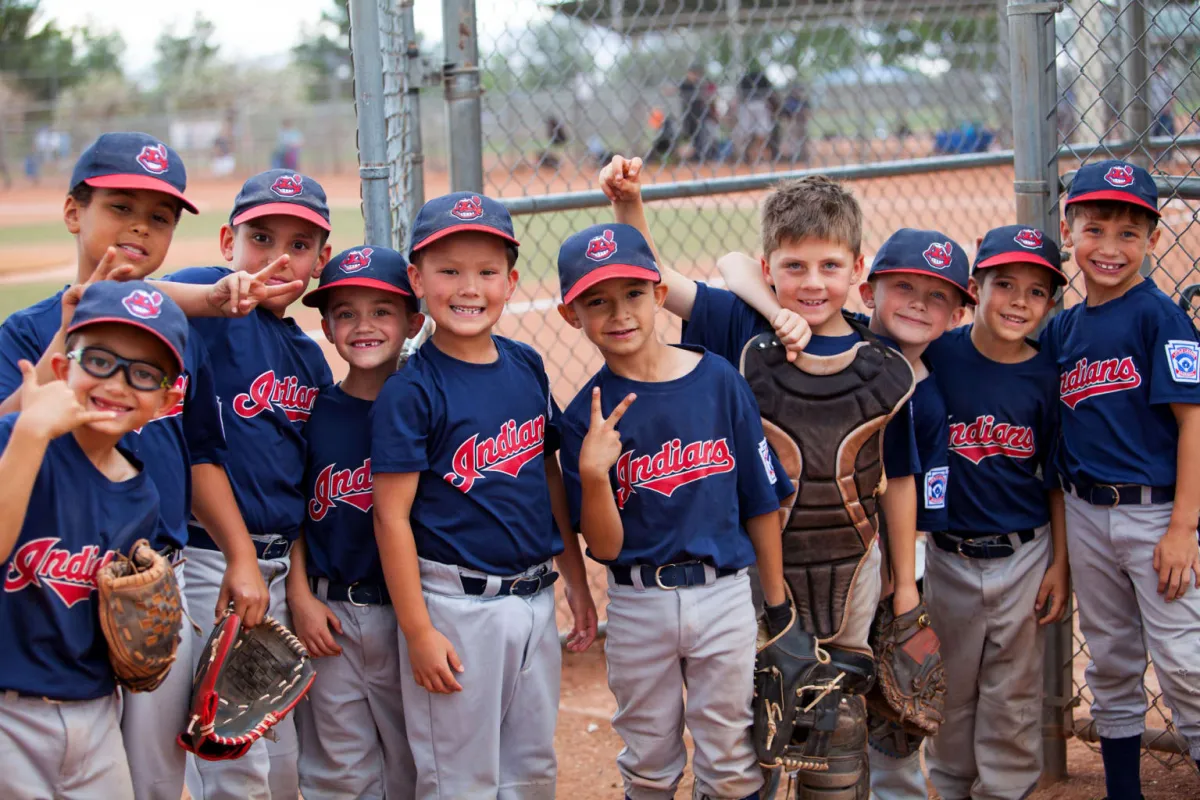 Photo: Little League, via res.cloudinary.com
But good intentions have a way of snowballing. Organized leagues led to competitive leagues. Competitive leagues led to travel teams. Travel teams led to year-round training. And suddenly, what kids once controlled entirely had become an adult-managed enterprise where children were the employees rather than the CEOs of their own fun.
When Kids Wrote the Rulebook
The old system was beautifully chaotic. Kids showed up when they wanted, left when they had to, and solved problems on the spot. If only eight players arrived, they played with eight. If someone hit the ball into Mrs. Peterson's yard one too many times, they moved the game. If the youngest kid couldn't hit a fastball, they switched to slow-pitch.
 Photo: Mrs. Peterson's yard, via yt3.googleusercontent.com
These weren't just games — they were laboratories for democracy. Kids learned to negotiate, compromise, and include others not because adults told them to, but because excluding people meant fewer players and a worse game. They developed leadership skills by taking charge when situations demanded it, not because they were appointed team captain.
The rules were fluid, fair, and entirely kid-created. "Ghost runners" appeared when teams were short on players. "Do-overs" happened when everyone agreed something wasn't fair. Arguments got settled by majority vote or rock-paper-scissors, not by consulting an official rulebook.
The Professionalization of Childhood
Today's youth sports landscape would be unrecognizable to those 1970s sandlot players. The average family with a child in competitive sports spends $883 annually on registration fees alone — before equipment, travel, and training costs. Elite club teams can cost families $10,000 per year or more.
Children as young as eight specialize in single sports, training year-round with professional coaches who've never met their parents outside the athletic context. Travel teams crisscross the country for tournaments, turning weekends into logistics exercises that require spreadsheets to coordinate.
The casual "show up and play" mentality has been replaced by rigorous scheduling. Practice three times a week. Games on weekends. Private lessons on Tuesday. Strength training on Thursday. Summer camps that cost more than some families' vacation budgets.
What We Gained and Lost
The modern system has undeniable benefits. Today's young athletes receive better coaching, safer equipment, and more opportunities to develop their skills than any previous generation. Organized leagues have created pathways for talented players to reach college scholarships and professional careers that simply didn't exist in the sandlot era.
Title IX and increased awareness of inclusion have opened sports to girls and underrepresented communities in ways the old boys' network never could. Modern coaching emphasizes proper technique and injury prevention that protects young bodies from the kind of damage that "playing through pain" once caused.
But the costs have been steeper than anyone anticipated. The freedom to experiment, fail, and try again without adult judgment has largely disappeared. Kids who once learned to solve conflicts themselves now look to referees and coaches for every decision. The intrinsic motivation to play — because it was fun — has been replaced by external pressures to perform for parents, coaches, and college scouts.
The Anxiety Olympics
Perhaps most significantly, we've created a generation of young athletes who've never experienced sports without performance pressure. Every game matters for rankings. Every practice is evaluated. Every season could be the one that determines their athletic future.
Parents invest thousands of dollars and countless hours driving to tournaments, creating an emotional and financial pressure that transforms children's games into high-stakes auditions. Kids report feeling anxious about disappointing coaches, parents, and teammates in ways that would have been foreign to previous generations who simply played for the joy of playing.
The specialization trend has created young athletes who are incredibly skilled at one sport but have never experienced the well-rounded athletic development that came from playing different games throughout the year. They've gained expertise but lost the broad foundation of movement skills that made previous generations more adaptable athletes.
The Lost Art of Showing Up
The most profound loss might be the simplest one: kids no longer know how to organize their own fun. The generation that once negotiated teams, settled disputes, and created games from scratch now waits for adults to tell them when, where, and how to play.
When practices get canceled, many young athletes don't know what to do with themselves. The idea of grabbing a ball and finding some friends to play with has become as foreign as using a rotary phone. They've been so thoroughly scheduled that unstructured time feels uncomfortable rather than liberating.
The Endless Summer We Left Behind
Those long summer days of pickup games taught lessons that no organized league can replicate. Kids learned that sports were supposed to be fun, that rules could be flexible, and that the best games were the ones where everyone got to play.
They discovered that leadership meant including others, that fairness was more important than winning, and that the best memories came from the unexpected moments — like the time Sarah hit her first home run, or when Tommy's little brother finally caught a fly ball.
The modern youth sports industrial complex has given us better athletes, safer playing conditions, and more opportunities than ever before. But it's also taken something irreplaceable: the simple magic of kids being kids, making up games as they went along, and playing until the streetlights came on.
Somewhere in the pursuit of excellence, we forgot that the best part of sports was never the winning. It was the showing up, the figuring it out together, and the sweet exhaustion of a day spent playing games that mattered to no one except the kids who invented them.