Kids Used to Be Unsupervised. The Shift Happened Faster Than Anyone Realized.
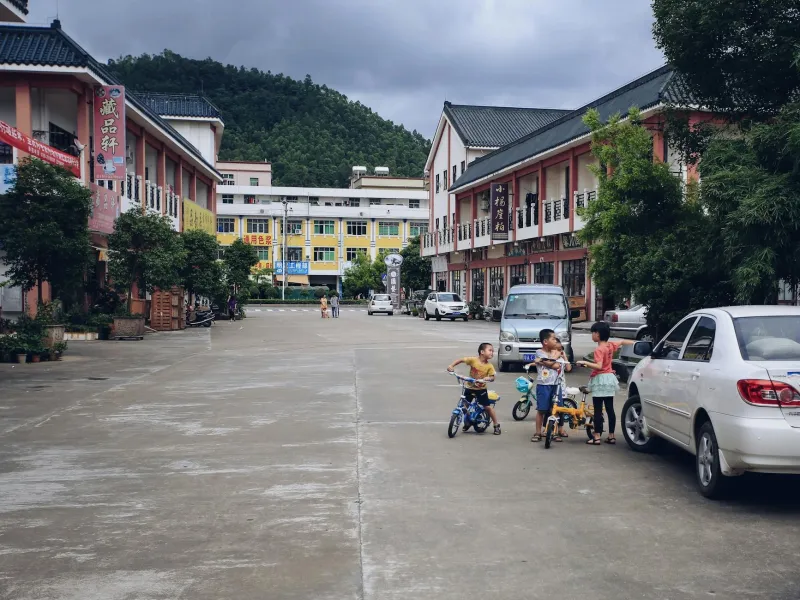
Kids Used to Be Unsupervised. The Shift Happened Faster Than Anyone Realized.
Imagine telling a parent in 2024 that you're letting your 10-year-old ride his bike to a friend's house three neighborhoods over, with no phone, no check-ins, and no expectation that he'll be back until the streetlights come on. The parent would probably call child protective services on you.
In 1982, this wasn't parenting. This was just childhood.
By most measures, crime in America was significantly higher in the 1970s and 1980s than it is today. Yet children had far more freedom. They played outside unsupervised for hours. They resolved conflicts with peers without adult mediation. They got bored, and that boredom forced them to be creative. They experienced genuine independence, including the occasional scraped knee, the humiliation of losing an argument, and the satisfaction of solving a problem without asking an adult for help.
Somewhere between then and now—roughly in the span of a generation—we fundamentally rewired childhood. And almost nobody noticed it happening in real time.
The Geography of Supervised Play
In the mid-20th century, a child's world was defined by geography. You played with the kids on your block. You explored the vacant lot at the edge of the neighborhood. You rode your bike to the local swimming hole or creek. Your parents knew roughly where you were, but not precisely. They certainly didn't track your location on a smartphone.
If you wanted to do something—build a fort, start a game of baseball, go exploring—you had to organize it yourself. You had to convince other kids to participate. You had to negotiate rules. You had to handle the social friction that came from disagreements. There was no adult referee waiting to step in and mediate.
This wasn't a philosophy. It was just the default. Parents had multiple children, smaller houses, and no expectation that they should be constantly entertained or supervised. The idea that an adult should watch children play seemed ridiculous. The whole point of play was that it happened without adults.
By the early 2000s, the shift was nearly complete. Playdates became scheduled events, arranged by parents and often supervised. Play became structured and age-segregated. If kids wanted to do something, they asked an adult. If a conflict arose, an adult intervened. The child's world shrank from "the neighborhood" to "places where my parents have decided it's safe."
The Panic That Started It
The conventional story is that actual crime increased, so parents became more protective. But the timeline doesn't match. Crime in America peaked in the early 1990s and has been declining for 30 years. Yet helicopter parenting intensified as crime declined.
What actually happened is more subtle. Starting in the 1980s, media coverage of child abduction and danger increased dramatically, even as the actual statistical risk remained low. The missing children movement, which emerged from genuine concern about cases like the disappearance of Etan Patz in 1979, created a cultural narrative of danger that didn't match reality.
By the 1990s, news programs were running regular segments on "stranger danger." Milk cartons had pictures of missing children on them. Parents became convinced that allowing a child to walk to school alone was reckless endangerment. The irony is that the 1980s and 1990s, when this panic was at its peak, were actually safer for children than the 1970s had been.
But perception is more powerful than statistics. Once the fear took hold, it cascaded through parenting culture. If you let your kid roam the neighborhood while other parents were keeping theirs locked down, you were the irresponsible one. Parenting became competitive, and the competition was over who could be most vigilant.
The Institutional Shift
At the same time, institutions began formalizing childhood. Youth sports, which were once casual and self-organized, became professionalized. A pickup baseball game became a travel league with tryouts and coaches. Summer meant structured camps and lessons, not weeks of boredom punctuated by adventure.
Schools reduced recess. They eliminated unstructured time. They added security measures and supervision. The assumption shifted: if children are unsupervised, something bad might happen, and we'll be liable. So supervision became institutionalized.
Meanwhile, the rise of screen-based entertainment gave parents a tool for managing boredom without unleashing kids into the neighborhood. A child plugged into a video game or tablet isn't running wild. They're contained, controllable, and monitored. The shift to indoor, supervised, screen-based childhood happened gradually, but by the 2010s, it was nearly total.
What Kids Actually Lost
Research on unsupervised childhood is revealing. Children who play without adult supervision develop better problem-solving skills. They're more resilient to social conflict. They have higher self-esteem and lower anxiety, not higher. They're better at managing risk because they've actually had to think about consequences.
The irony of supervision is that it often makes children less safe. A child who's never had to navigate a conflict, assess a risky situation, or make a decision without an adult's input is more vulnerable when they eventually encounter those situations alone. They lack the experience and confidence to handle them.
Unsupervised play also fostered creativity and independence in ways that structured activities can't replicate. The boredom of an empty afternoon forced children to entertain themselves. The absence of an adult referee meant they had to negotiate their own rules. These weren't luxuries—they were crucial developmental experiences.
There's also the social cost. Children today have fewer unstructured friendships. They know fewer neighbors. They're less likely to have experienced genuine independence. The world feels larger and more dangerous, even though statistically it's safer.
The Perception Problem
What's particularly striking is how normalized supervised childhood has become. A parent letting a 12-year-old walk home from school alone is now considered neglectful. A child playing in a nearby park without a parent watching is a reason for neighbors to call the police. We've constructed a world where independence is treated as a form of abuse.
This isn't because of actual increases in danger. It's because we've collectively decided that the risk of something bad happening—even though it's statistically tiny—is unacceptable. We've traded childhood independence for the illusion of total safety.
Meanwhile, the kids themselves are reporting higher levels of anxiety, depression, and stress than previous generations. They're less likely to engage in physical activity. They're more likely to experience FOMO and social anxiety. They have fewer real-world friendships and more digital ones. Whether supervised childhood caused these outcomes or merely coincided with them is still debated, but the correlation is unmistakable.
The Arithmetic of Control
The shift from unsupervised to supervised childhood happened in just one generation. Parents who grew up running wild in the 1970s and 1980s are now keeping their own kids on much tighter leashes. They're not necessarily more paranoid or anxious—they're responding to cultural pressure and institutional changes that make unsupervised childhood feel impossible.
What we've gained is peace of mind for parents and a reduced risk of certain types of harm. What we've lost is harder to quantify: the experience of genuine independence, the confidence that comes from solving problems without adult help, the freedom to be bored and to figure out how to un-bore yourself.
It's not clear we made the right trade.