Your Word Was Your Bond: When American Business Ran on Trust Instead of Lawyers
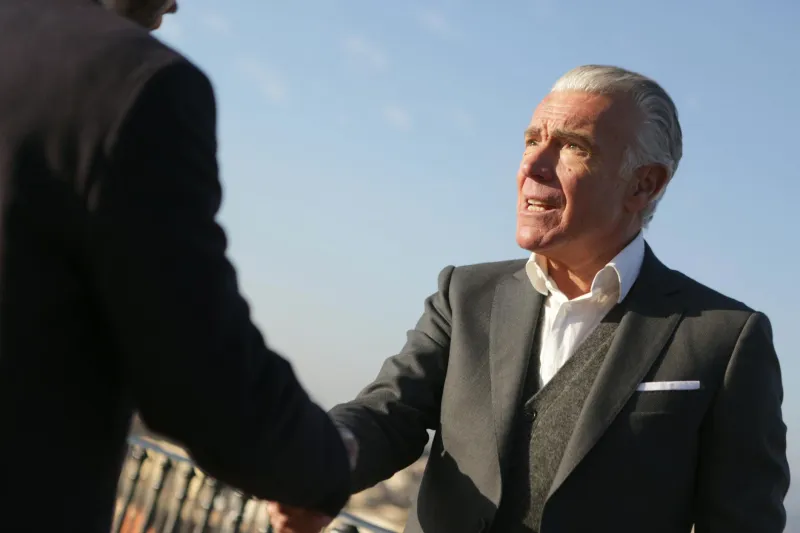
Your Word Was Your Bond: When American Business Ran on Trust Instead of Lawyers
Walk into any coffee shop today and you'll be asked to tap "I agree" on a tablet before your credit card processes. That simple transaction — coffee for money — now requires your digital signature on terms and conditions that would take twenty minutes to read. Meanwhile, your great-grandfather closed million-dollar cattle deals with nothing more than a handshake and his reputation in town.
Somewhere between then and now, America transformed from a society where your word was your bond into one where every interaction requires legal protection.
When Main Street Ran on Reputation
In 1950s America, the corner hardware store operated on a simple principle: if you were good for it, you got what you needed. Store owners knew their customers by name, their families, and their financial situations. Credit wasn't a number generated by an algorithm — it was whether Jim Thompson would vouch for you at the bank.
Local contractors built houses based on verbal agreements. Farmers sold their crops with a handshake at the grain elevator. Even car dealerships operated on personal relationships rather than 47-page financing contracts. The local banker knew whether you'd pay back a loan not from your credit score, but from watching how you handled your previous commitments to neighbors.
This wasn't naive idealism. It was a functioning economic system built on social accountability. In small-town America, your reputation was your most valuable asset. Stiff someone on a deal, and word would spread through the community faster than gossip at a church social. You'd find yourself unable to do business anywhere in town.
The Lawyers Moved In
The shift began in the 1960s and accelerated through the following decades. As America became more mobile and urbanized, the tight social networks that enforced informal agreements began to break down. You could stiff a contractor in Phoenix and start fresh in Denver with no one the wiser.
Simultaneously, the legal profession exploded. In 1960, there was roughly one lawyer for every 630 Americans. By 2020, that ratio had shrunk to one lawyer for every 240 Americans. More lawyers meant more lawsuits, and more lawsuits meant business owners needed protection.
The rise of consumer protection laws, while beneficial in many ways, also contributed to the death of informal agreements. Suddenly, verbal contracts became legally murky territory. What had once been resolved with a conversation between neighbors now required documentation, witnesses, and legal counsel.
The Digital Age Killed What Was Left
The internet delivered the final blow to trust-based commerce. When business moved online, the personal relationships that had governed transactions for centuries became impossible. You couldn't look someone in the eye, know their family, or rely on community pressure to ensure fair dealing.
Digital platforms responded with increasingly complex legal frameworks. Today's terms of service agreements are longer than most novels. The average American encounters more legal language in a typical week — through apps, websites, and digital transactions — than most people in 1950 saw in a lifetime.
Every interaction now assumes the worst-case scenario. Coffee shop loyalty programs require liability waivers. Buying a lawn mower means agreeing not to sue if you use it improperly. Even children's birthday party venues require parents to sign documents absolving the business of responsibility for virtually everything except nuclear war.
What We Lost in Translation
The shift from trust to legal protection solved real problems. It reduced fraud, protected consumers, and created accountability in an increasingly anonymous economy. But it also fundamentally changed how Americans relate to each other in business.
The old system created genuine relationships. When your banker knew your family, your loan application wasn't just about numbers — it was about your character and your story. When your contractor lived in the same neighborhood, he had a personal stake in doing quality work.
Today's legal framework, while more equitable and protective, treats every transaction as a potential adversarial relationship. We've gained consumer protection but lost the social bonds that once made business feel personal and collaborative.
The Trust Tax
This transformation came with hidden costs. The "trust tax" — the time and money spent on legal protection — is now built into everything we buy. Every product price includes the cost of liability insurance, legal compliance, and dispute resolution systems.
Small businesses, once the backbone of local economies, struggle under the weight of legal requirements that their handshake-deal predecessors never faced. Starting a simple service business now requires navigating a maze of regulations, insurance requirements, and legal protections that can cost more than the actual equipment needed to do the work.
Looking Back Through the Lens
The death of the handshake deal reflects broader changes in American society — increased mobility, urbanization, and the rise of consumer protection. We've gained important safeguards and legal rights, but we've also lost something essential about how we relate to each other as economic actors.
Perhaps the most telling difference is this: in 1950, the question was whether you could trust someone enough to do business with them. Today, the question is whether your legal protection is sufficient to survive doing business with someone you don't trust at all.
The handshake deal is dead, and we're all a little more protected — and a little more alone — because of it.