The Block Party Generation: When Americans Actually Knew the People Next Door
The Block Party Generation: When Americans Actually Knew the People Next Door
Mrs. Henderson from two doors down had your spare key. The Johnsons across the street watched your kids walk home from school. And when the Millers went on vacation, half the block knew to keep an eye on their mail. This wasn't some idyllic TV fantasy — this was standard operating procedure in American neighborhoods just fifty years ago.
Today, a Pew Research study reveals that 57% of Americans have never had a meaningful conversation with their next-door neighbor. We've traded community cookouts for Ring doorbells, front porch conversations for social media scrolling, and knowing our neighbors' phone numbers by heart for barely knowing their names.
When Front Porches Were the Original Social Network
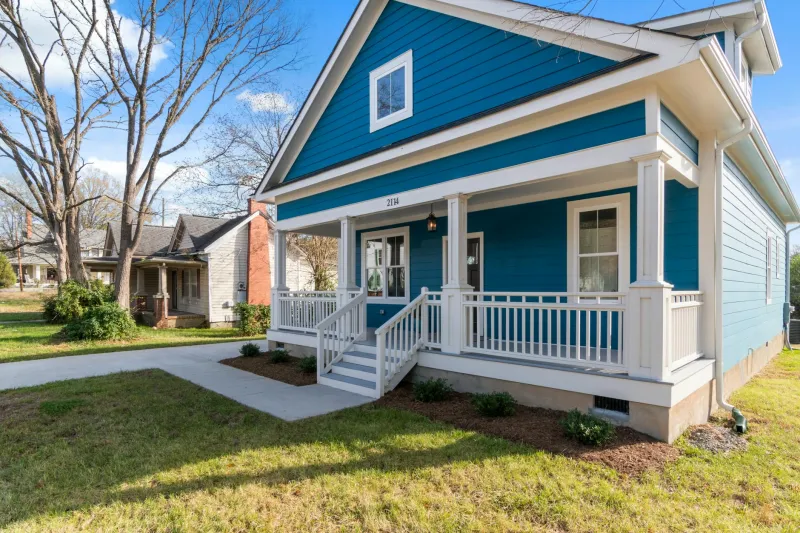
In the 1950s and 1960s, American suburban life revolved around visibility and accessibility. Houses were designed with prominent front porches where families gathered after dinner. Kids played elaborate games of hide-and-seek that spanned entire blocks. Parents chatted over backyard fences while hanging laundry.
The average American could recite at least a dozen neighbors' phone numbers from memory — not because they were particularly social, but because neighborhood interdependence was simply how life worked. When the Krafts needed a babysitter, they called the teenage daughter three houses down. When Mr. Peterson's lawnmower broke, he borrowed one from the family around the corner.
Neighborhood phone trees spread news faster than any modern group chat. A single call about a lost dog or a last-minute block party could reach thirty families within an hour, each person adding their own updates to the chain.
The Great Retreat Indoors
The transformation didn't happen overnight. It started with air conditioning becoming standard in the 1970s. Suddenly, those evening front porch gatherings moved inside to climate-controlled living rooms. Windows stayed closed. The ambient sounds of neighborhood life — kids playing, adults talking, radios humming — disappeared behind sealed glass and humming AC units.
Garage door openers, which became commonplace in the 1980s, created another invisible barrier. Instead of parking in driveways and walking to front doors, families began driving directly into closed garages, emerging inside their homes without ever stepping foot in the shared neighborhood space.
Backyard privacy fences completed the physical separation. What were once open yards where children roamed freely between properties became individual fortresses, each family contained within their own wooden boundaries.
The Architecture of Isolation
Modern suburban design actively discourages neighbor interaction. New developments prioritize garage-forward architecture, where the most prominent feature of each house faces the street is a massive garage door, not a welcoming front entrance. Driveways have replaced front yards as the dominant landscape feature.
Meanwhile, "great rooms" and open floor plans moved family life to the back of houses, away from street-facing windows where neighbors might catch glimpses of daily life and strike up conversations. The front of the house became purely decorative — a facade with no real function in family life.
Subdivisions grew larger but less walkable. Curved streets and cul-de-sacs, designed to discourage through traffic, also discouraged the kind of casual foot traffic that leads to neighborly encounters. You can't bump into someone at the corner store if there is no corner store.
When Digital Connection Replaced Physical Proximity
The final nail in the neighborhood coffin came with smartphones and social media. Why wave to the neighbor when you're scrolling through Instagram? Why organize a block party when you're already connected to hundreds of "friends" online?
Paradoxically, we became more connected to people thousands of miles away while becoming strangers to the people sleeping twenty feet from our bedroom walls. We know intimate details about our college roommate's breakfast but couldn't pick our next-door neighbor out of a police lineup.
Delivery apps eliminated even the minimal neighborhood interaction that came with local errands. No more running into neighbors at the grocery store or striking up conversations while walking to the mailbox — everything arrives at our doorstep.
The Cost of Anonymous Living
This shift toward neighborhood anonymity came with unexpected consequences. During natural disasters, Americans in tight-knit neighborhoods recover faster and with less trauma than those in anonymous suburbs. Children in connected neighborhoods are statistically safer, not because of security systems, but because multiple adults know them by name and watch out for them.
Mental health researchers have identified "neighborhood social capital" as a significant factor in overall wellbeing. People who know their neighbors report lower rates of depression and anxiety, even when controlling for income and education levels.
The elderly are particularly affected. In the era of known neighbors, seniors aged in place with informal support networks. Today, many live isolated in suburban houses, cut off from community connection until crisis strikes.
What We Lost in Translation
Today's American neighborhoods are safer, more private, and more comfortable than ever before. But they're also lonelier. We've traded the messiness of human connection — the borrowed tools that never get returned, the neighbor kids who trample your flower beds, the awkward small talk while getting the mail — for the clean efficiency of anonymous living.
The phone numbers we memorized have been replaced by contact lists we never look at. The neighbors who knew our middle names have been replaced by Ring camera notifications. We've gained convenience and lost community, one garage door at a time.
Somewhere between the front porch and the smartphone, America forgot how to be neighbors.