When Fun Meant Leaving the House: How America's Entertainment Moved From Public Spaces to Private Screens
When Fun Meant Leaving the House: How America's Entertainment Moved From Public Spaces to Private Screens
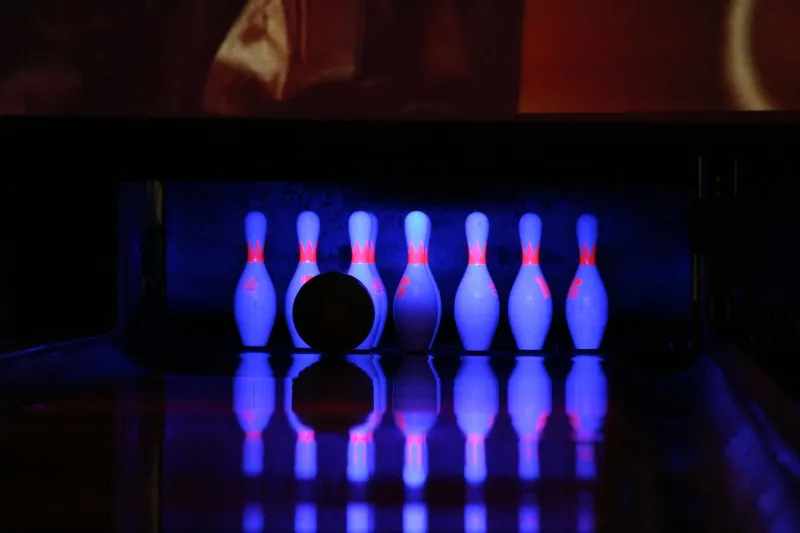
Every Friday night in 1975, the Sunset Bowling Alley in suburban Detroit was packed. Families claimed their lanes, teenagers flirted over nachos, and league players argued about strikes until closing time. The parking lot buzzed with conversations that spilled out from the building, creating a weekly ritual that brought together people who might never interact otherwise.
Today, that same building houses a storage facility. The neon pins have been replaced by security cameras, and the only sounds are the hum of climate control units protecting someone's forgotten furniture.
The Great Indoors Migration
For most of American history, entertainment meant leaving your house. It wasn't a choice — it was the only option. If you wanted to watch a movie, you went to a theater. If you wanted to hear music, you attended a concert or dance. If you wanted to have fun with friends, you met them somewhere public.
This wasn't just about technology limitations. These spaces served as America's unofficial community centers, places where social boundaries blurred and strangers became neighbors. The roller rink didn't just provide entertainment — it provided a reason for the shy kid and the popular kid to end up in the same place, wobbling around the same wooden floor.
The drive-in theater perfectly captured this spirit. Families would load up their cars with blankets and snacks, arriving hours early to claim the best spots. Kids ran between vehicles, making friends with other families. Parents chatted through car windows during intermission. The movie was almost secondary to the social experience of being there together.
Where Everyone Knew Your High Score
The local arcade was perhaps the most democratic of these spaces. It didn't matter if you drove a beat-up Chevy or your dad's Cadillac — your worth was measured in quarters and high scores. The kid who struggled in school might be the Pac-Man champion, earning respect that had nothing to do with grades or family income.
These arcades created their own social hierarchies and friendships. Players would gather around someone attempting a new high score, cheering or groaning collectively. Techniques were shared, rivalries formed, and legends were born. The arcade wasn't just a place to play games — it was where you learned to compete, cooperate, and celebrate with people you'd never choose to hang out with otherwise.
The Convenience Revolution
Then came the VCR in the 1980s, followed by cable television, video game consoles, and eventually the internet. Each innovation promised the same thing: you could have the same entertainment experience at home, without the hassle of getting dressed, driving somewhere, or dealing with other people.
And they were right — sort of. You could watch movies at home, play games alone, and listen to any song ever recorded without leaving your couch. What wasn't immediately obvious was what we were trading away.
The first casualty was serendipity. When entertainment happened in public spaces, you encountered things by accident. You might discover a new band because they were playing at the skating rink, or find a new favorite movie because it was the only thing showing at the drive-in. Today's algorithms are sophisticated, but they can't replicate the randomness of bumping into something unexpected in a shared space.
The Disappearing Commons
By the 2000s, the transformation was nearly complete. Bowling alleys closed by the hundreds. Drive-in theaters dwindled from over 4,000 in the 1950s to fewer than 300 today. Roller rinks became event spaces or discount stores. The arcade became a nostalgic corner in some movie theaters, if it existed at all.
What replaced them wasn't just different technology — it was a fundamentally different approach to leisure time. Entertainment became something you consumed rather than something you participated in. The social element, once inseparable from fun, became optional.
Streaming services now offer more entertainment options than any generation in history could have imagined. Netflix alone has more content than you could watch in several lifetimes. But this abundance comes with isolation. The shared experience of watching something together — really together, in the same space, reacting to the same moments — has become rare.
What We Lost in Translation
The shift from public to private entertainment changed more than just where we have fun. It altered how we form relationships, build communities, and encounter people different from ourselves. The bowling alley brought together the banker and the mechanic. The drive-in mixed teenagers and grandparents. The arcade created friendships based on skill rather than social status.
Today's entertainment algorithms are designed to give us exactly what we want, when we want it. But the old system gave us something potentially more valuable: encounters with the unexpected, relationships with unlikely people, and the irreplaceable experience of being part of something larger than ourselves.
When Americans stopped leaving the house to be entertained, we gained convenience and choice. What we lost was harder to measure but easier to feel — the sense that fun was something we created together, rather than something we consumed alone. The screen in your living room can deliver any story ever told, but it can't replicate the magic of being surprised by the story sitting right next to you.