When Medicine Came With a First Name: The Personal Touch America's Drugstores Lost
The Man Behind the Counter
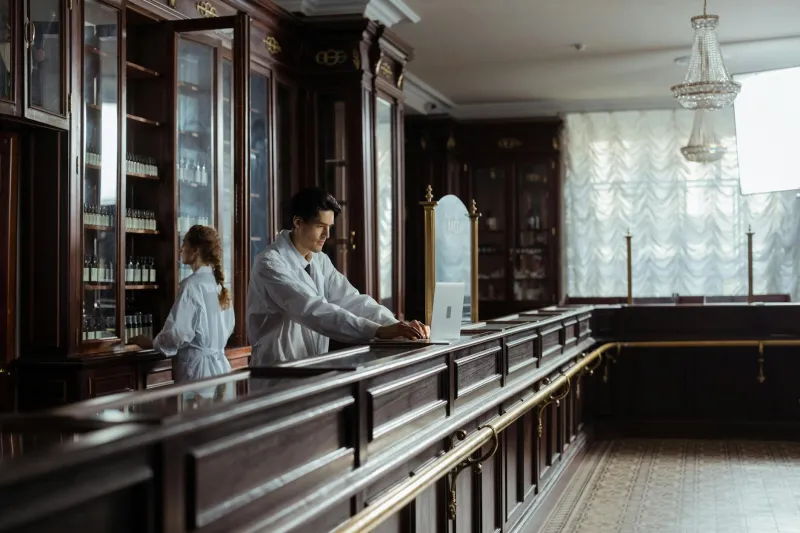
Walk into any pharmacy in 1965, and chances were good that Frank or Margaret behind the counter knew not just your name, but your mother's blood pressure medication, your kid's allergy to penicillin, and probably which prescription your husband had been putting off refilling for three months.
These weren't just people who counted pills. They were neighborhood fixtures who served as informal health advisors, emergency credit lines, and sometimes the only medical professional many families could afford to consult regularly. The corner drugstore was as much a part of American healthcare as the doctor's office—maybe more so, since you visited it far more often.
More Than Just Pill Counting
The old-school pharmacist operated with an intimacy that seems almost quaint today. They knew Mrs. Johnson always picked up her heart medication on the first Tuesday of every month, and when she didn't show up, they'd call to check on her. They remembered that little Tommy couldn't swallow pills and would crush his antibiotics into applesauce without being asked.
This personal knowledge wasn't just good customer service—it was a safety net. Before computer systems tracked drug interactions, pharmacists relied on their memory and handwritten records to catch potentially deadly combinations. They'd notice when someone was doctor shopping, spot signs of addiction before it spiraled, and gently suggest generic alternatives when money was tight.
Many pharmacists extended informal credit during lean times, keeping a mental tally of who owed what and rarely pressing for immediate payment. During the Great Depression and its aftermath, this flexibility kept many families medicated when they couldn't afford to be.
The Consultation Counter
People brought their health questions to the pharmacist first, not their doctor. Got a rash? The pharmacist might recommend a cream and tell you to see the doc if it didn't clear up in a week. Trouble sleeping? They'd suggest cutting back on coffee before reaching for pills. This informal triage saved families money and often prevented minor issues from becoming major problems.
The pharmacist also served as a translator between the doctor's cryptic instructions and what patients actually needed to know. They'd explain not just when to take medication, but why, what to expect, and what side effects to watch for. This education happened naturally, as part of the relationship.
When Everything Changed
The transformation didn't happen overnight, but by the 1990s, the writing was on the wall. Chain pharmacies began dominating the landscape, promising lower prices and longer hours. Independent drugstores couldn't compete with the buying power of CVS, Walgreens, and Rite Aid.
With chains came standardization. The cozy consultation corner was replaced by a drive-through window. Pharmacists became interchangeable parts in a larger machine, often working for different stores on different days. The personal relationship dissolved into a transaction.
The Algorithm Knows Best
Today's pharmacy experience is undeniably more efficient. Computer systems instantly flag drug interactions that even the most experienced pharmacist might miss. Automated dispensing reduces human error. Electronic prescriptions eliminate the guesswork of reading doctors' handwriting.
Your prescription history follows you anywhere in the chain, accessible with a few keystrokes. Mail-order pharmacies deliver medications to your door, often at lower cost than retail stores. The system works—if what you want is pure efficiency.
But something essential was lost in translation. The pharmacist who fills your prescription today might be seeing your name for the first time, even if you've been a customer for years. They're working from a screen, not from memory, following protocols designed by corporate headquarters rather than responding to your individual situation.
What We Traded Away
The old system had its flaws. Personal relationships could lead to favoritism. Some pharmacists were better than others at catching problems. Record-keeping was inconsistent, and moving to a new town meant starting over with a stranger.
But we also traded away something harder to quantify: the sense that someone in the healthcare system actually knew you as a person, not a prescription number. The corner pharmacist was often the most accessible medical professional in town, available without an appointment and usually willing to chat about your concerns.
They were also community anchors, local business owners with a stake in the neighborhood's wellbeing. When they closed shop or sold to a chain, towns lost more than a pharmacy—they lost a piece of their social fabric.
The Price of Progress
Modern pharmacy practice is undoubtedly safer and more convenient. Today's pharmacists are better trained, with more rigorous education requirements than their predecessors. Computer systems prevent errors that could be fatal.
Yet many Americans report feeling disconnected from their healthcare, frustrated by impersonal service and the sense that they're just another number in the system. The efficiency gains are real, but so is the loss of human connection that once made healthcare feel less clinical and more caring.
The neighborhood pharmacist who knew your name represented something we're still trying to replace: the idea that healthcare could be both professional and personal, that efficiency and empathy didn't have to be mutually exclusive. In our rush toward better systems, we may have forgotten that the best medicine sometimes comes with a first name attached.