When Your Doctor Actually Knew You: The Lost Art of Personal Medicine
The Doctor Who Knew Your Story
Dr. Patterson kept his patient files in a wooden cabinet that had belonged to his father, also a doctor in the same small Ohio town. Inside those manila folders weren't just medical records—they were family histories spanning decades. He knew that the Hendersons always ran high blood pressure after forty, that the Miller children were prone to ear infections every winter, and that Mrs. Chen's arthritis flared up before rainstorms.
This wasn't unusual. This was simply how medicine worked in America for most of the 20th century.
The family doctor wasn't just a medical professional—he was a cornerstone of community life. He delivered babies, treated their childhood ailments, guided them through adolescence, and eventually cared for them in their final years. Often, he'd repeat this cycle with their children and grandchildren.
When House Calls Were Just Calls
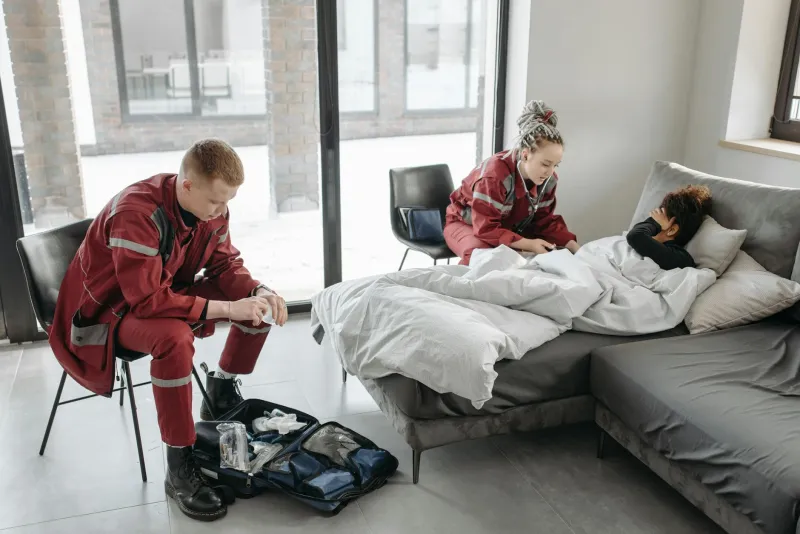
Picture this: It's 2 AM in 1955, and your child has a raging fever. You don't bundle them into a car for a frantic drive to an emergency room. You pick up the phone and call Dr. Patterson. Within thirty minutes, he's at your kitchen table with his black leather bag, taking your child's temperature and reassuring you with the calm authority that comes from having seen it all before.
House calls weren't a luxury service—they were standard practice. Doctors understood that sometimes the best medicine happened in the patient's own environment, where they could see how people actually lived, what stresses they faced, and what resources they had available.
Dr. Patterson charged five dollars for a house call in 1955—about fifty dollars in today's money. Compare that to a modern emergency room visit, which averages over $1,400, and you start to understand what we traded away.
The Thirty-Minute Appointment
When you visited Dr. Patterson's office, you weren't watching a clock. Appointments routinely lasted twenty to thirty minutes, sometimes longer if needed. He'd ask about your work, your family, your sleep patterns. He understood that your lower back pain might be connected to stress at the factory, or that your headaches could be related to caring for an aging parent.
This wasn't inefficiency—it was comprehensive care. Dr. Patterson could spot patterns and connections that modern specialists, seeing you for seven minutes every six months, simply cannot detect.
His examination was thorough and unhurried. He'd listen to your heart for a full minute, not the quick ten-second check that's standard today. He'd look into your eyes, feel your neck, ask follow-up questions. Most importantly, he'd explain what he was doing and why.
The Handwritten Record
Dr. Patterson's notes weren't dropdown menus or checkbox forms. They were detailed, handwritten observations that captured not just symptoms but context. "Patient seems tired, mentions working double shifts. Wife recently hospitalized. Check blood pressure more frequently." These weren't just medical facts—they were human stories.
He remembered these details because he wrote them himself, in his own words. There's something about the physical act of writing that embeds information in memory in ways that typing into a computer system never quite replicates.
When Medicine Became a Business
The transformation didn't happen overnight. Through the 1960s and 70s, healthcare began shifting from a personal service to a standardized industry. Insurance companies started demanding more documentation, more efficiency, more measurable outcomes.
The family doctor model couldn't scale. As populations grew and medical knowledge exploded, the intimate, generational approach to healthcare became economically unsustainable. Specialists emerged. Hospital systems consolidated. Electronic health records promised better coordination but delivered fragmentation instead.
Today's Seven-Minute Medicine
Walk into a modern doctor's office, and you'll likely see your physician for less than ten minutes. They're reading your chart for the first time as you speak, trying to understand your medical history through computer screens and previous notes written by colleagues they've never met.
Your "primary care physician" might be one of several doctors in a rotating practice. The person treating your diabetes today may not be the same person who diagnosed it last year. Continuity of care—once the foundation of medicine—has become a luxury that few can afford and fewer receive.
Patient portals have replaced phone calls. Symptoms are reported through apps rather than conversations. The human connection that once defined healthcare has been systematically engineered out in favor of efficiency and cost control.
What We Gained and Lost
Modern medicine can perform miracles that Dr. Patterson couldn't imagine. We can replace hearts, cure cancers, and prevent diseases that once decimated communities. Our diagnostic tools are incredibly sophisticated, our treatments more targeted and effective.
But somewhere in our rush toward medical efficiency, we lost something essential: the healing power of being truly known by the person caring for you.
Dr. Patterson couldn't order an MRI or prescribe the latest targeted therapy. But he could offer something that no amount of technology can replace—the comfort of being understood, the security of continuity, and the healing that comes from genuine human connection.
The Price of Progress
The question isn't whether we can return to the era of the small-town family doctor—we can't, and in many ways, we wouldn't want to. But as we continue to optimize healthcare for efficiency and profit, we might ask ourselves: What are we optimizing away?
In our pursuit of better medicine, have we forgotten what made good doctors great? And in our effort to treat diseases more effectively, have we lost sight of how to heal people?
Dr. Patterson's wooden filing cabinet might seem quaint now, but it represented something profound: a healthcare system built on relationships rather than transactions, on knowing patients rather than processing them, on healing people rather than just treating conditions.
That's not nostalgia talking. That's a reminder of what medicine could be again, if we decided it was worth the investment.