An Hour of Freedom Used to Be Every Kid's Right. Now It's a Luxury Schools Can't Afford.
The Hour That Built America
In 1975, every American elementary school student could count on something that seems almost revolutionary today: a full hour of unstructured free time in the middle of the school day. Not organized sports. Not supervised activities. Not educational games designed to reinforce classroom learning. Just kids, a playground, and the freedom to figure out what to do with themselves.
Recess wasn't considered a luxury or a reward for good behavior. It was as fundamental to the school day as math or reading. Teachers didn't debate whether children "deserved" recess or whether it was taking time away from more important activities. The idea that unstructured play might be unnecessary would have struck educators as absurd.
Today, that hour of freedom has become a casualty of American education's obsession with standardized testing and academic achievement.
When Play Was Part of the Plan
The typical 1970s elementary school day included multiple recess periods: a 15-minute morning break, a full hour for lunch and outdoor play, and often another 15-minute afternoon break. Children spent roughly 90 minutes of their school day in unstructured time—nearly 25% of their total school experience.
These weren't empty periods that schools reluctantly tolerated. Educators understood that children needed time to run, play, socialize, and decompress between academic subjects. Recess was considered essential for children's physical development, social learning, and mental health.
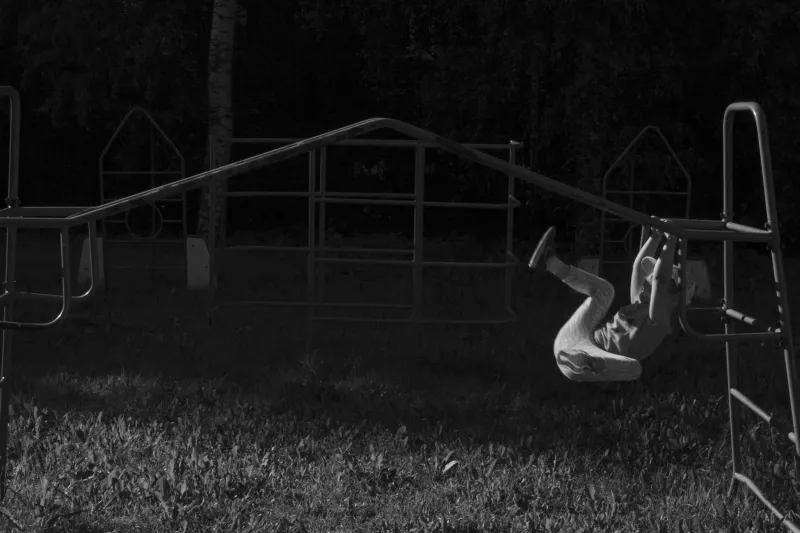
The playground itself reflected this philosophy. Schools invested in substantial outdoor equipment: swings, seesaws, monkey bars, and large open spaces for running games. The playground wasn't an afterthought—it was infrastructure that schools maintained as carefully as their classrooms.
The Squeeze Begins
The erosion of American recess began gradually in the 1990s and accelerated dramatically after the No Child Left Behind Act of 2001. As schools faced increasing pressure to improve standardized test scores, administrators looked for ways to add more instructional time to the school day.
Recess became an obvious target. Unlike math or reading, unstructured play time didn't directly contribute to measurable academic outcomes. School boards could eliminate 30 minutes of recess and add 30 minutes of test preparation without anyone questioning their commitment to education.
The transformation was swift and dramatic. By 2010, nearly 40% of American elementary schools had reduced or eliminated recess entirely. The average recess period had shrunk from an hour to 20 minutes. Some schools began using recess as a disciplinary tool, taking it away from children who misbehaved or fell behind academically.
The Academic Arms Race
The pressure to maximize academic instruction time reflected a broader shift in American educational philosophy. Schools began operating more like test preparation factories than environments for child development. Every minute of the day needed to contribute directly to measurable academic outcomes.
This approach treated children like miniature adults who could focus intensively for hours without breaks. It ignored decades of research about child development and learning that emphasized the importance of physical activity, social interaction, and unstructured time for healthy brain development.
Schools that maintained longer recess periods found themselves defending what previous generations had considered obviously beneficial. Administrators had to justify why children needed time to play rather than explaining why they needed more time to study.
What Research Revealed
As recess disappeared from American schools, researchers began studying what children lost when unstructured play time was eliminated. The findings were striking and consistent: children who had adequate recess performed better academically, showed improved social skills, and exhibited fewer behavioral problems.
Studies found that children who had at least 15 minutes of recess before a lesson scored significantly higher on attention and memory tasks than children who went directly from one academic subject to another. Physical activity during recess improved children's ability to focus during subsequent classroom instruction.
The research also revealed that recess provided irreplaceable opportunities for social and emotional learning. During unstructured play, children learned to negotiate conflicts, create rules, include others, and manage their own behavior without constant adult intervention.
The Liability Factor
Another force driving the elimination of recess was America's growing concern with liability and safety. School administrators worried about playground injuries, bullying incidents, and the supervision requirements of outdoor play time.
It became easier to keep children inside, seated at desks, than to manage the perceived risks of outdoor play. Schools removed playground equipment rather than maintain it. They eliminated games like tag and dodgeball rather than teach children how to play them safely.
This risk-averse approach reflected broader changes in American childhood. The same cultural forces that led to the rise of helicopter parenting also influenced school policies. Unstructured time came to be seen as dangerous time—a period when children might get hurt, feel excluded, or engage in inappropriate behavior.
The Indoor Generation
The reduction of school recess coincided with the decline of unstructured outdoor play in American children's lives outside of school. Children who lost recess at school were also less likely to play outside at home, creating a generation with dramatically reduced exposure to physical activity and outdoor environments.
This shift had measurable consequences. Childhood obesity rates increased. Children's physical fitness declined. Rates of anxiety and depression among young people rose. While multiple factors contributed to these trends, the elimination of regular physical activity and unstructured play time was clearly part of the problem.
The International Perspective
While American schools were eliminating recess, other developed countries maintained or even expanded unstructured play time in their educational systems. Finnish schools, consistently ranked among the world's best, provide 15 minutes of recess after every 45 minutes of instruction.
Japanese elementary schools include substantial recess periods and expect children to manage their own playground activities with minimal adult supervision. These countries treat unstructured play as essential to education rather than as time stolen from learning.
The international comparison revealed that American education's obsession with maximizing instructional time wasn't shared by the world's most successful educational systems.
The Movement to Restore Play
In recent years, some American schools and districts have begun recognizing what they lost when they eliminated recess. Research-backed initiatives like "Playworks" and "Let Grow" have helped schools reintroduce unstructured play time and teach children how to manage their own playground activities.
These programs have shown that well-designed recess periods reduce behavioral problems, improve academic focus, and create more positive school climates. Children who had been struggling in highly structured environments often thrived when given opportunities for self-directed play.
The movement to restore recess represents a broader recognition that children's developmental needs haven't changed, even if educational policies have.
What an Hour of Freedom Actually Taught
The hour of recess that previous generations took for granted wasn't just about physical exercise or burning off energy. It was about learning skills that can't be taught in a classroom: how to negotiate with peers, how to create and follow rules, how to include others, how to handle disappointment, and how to entertain yourself.
Recess taught children that they had agency—that they could make choices about how to spend their time and what activities to pursue. It provided practice in self-regulation, social navigation, and creative problem-solving that no worksheet could replicate.
Most importantly, recess taught children that play had value—that joy, creativity, and physical movement were legitimate parts of their educational experience.
The Cost of Efficiency
The elimination of recess reflects American education's broader embrace of efficiency over effectiveness. The idea that every minute of the school day should contribute directly to measurable academic outcomes sounds logical but ignores how children actually learn and develop.
By treating recess as wasted time, schools eliminated one of the most powerful tools for supporting children's overall development. The hour of freedom that seemed like a break from learning was actually essential to making learning possible.
As some schools work to restore adequate recess time, they're rediscovering what previous generations knew instinctively: children who have time to play learn better when it's time to work. The challenge isn't finding time for recess—it's remembering why we thought we could educate children without it.