Before Swiping Right, Americans Met at Church Socials and Soda Fountains: The Lost Art of Courtship
When Love Required Showing Up
In 1948, if seventeen-year-old Mary Ellen wanted to meet someone special, she had exactly three socially acceptable options: the weekly church social, the monthly community dance at the town hall, or the slim chance of catching someone's eye at Miller's Soda Fountain after school. There was no swiping, no profiles to curate, and definitely no way to research a potential suitor's dating history before saying hello.
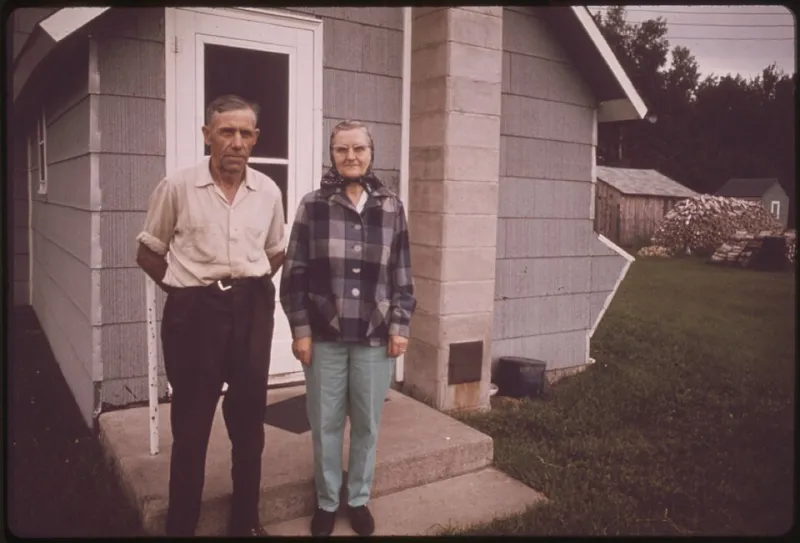
 Photo: Miller's Soda Fountain, via www.huidziekten.nl
This wasn't a limitation—it was the entire system. Meeting someone meant physically showing up to the same place at the same time, making eye contact across a crowded room, and working up the courage to start a conversation with nothing more than genuine interest and whatever charm you could muster in person.
The church social was the gold standard of respectable meeting places. Every Sunday after service, young adults would gather in the fellowship hall for coffee, homemade cookies, and carefully chaperoned mingling. Parents approved because the setting provided built-in moral guardrails. Young people appreciated it because everyone understood the unspoken rules: you were there to meet someone, but you had to do it with dignity and respect.
The Geography of Romance
What made mid-century courtship work was geography and routine. In small-town America, eligible young people naturally crossed paths through the rhythms of daily life. You might notice someone new at the Saturday night dance, strike up a conversation at the local diner, or find yourself paired with an interesting person during a church youth group activity.
This system created what sociologists now call "repeated exposure"—the psychological phenomenon where familiarity breeds attraction. You didn't fall for someone based on a carefully curated photo and a witty bio. Instead, you gradually noticed how kindly they treated the elderly church organist, or how they always helped clear tables after community events, or the way they laughed at your terrible jokes during the church youth group's weekly meetings.
The soda fountain at Miller's Drugstore served as an unofficial social hub where teenagers could gather without the formal structure of organized events. Here, conversations developed naturally over shared milkshakes and homework sessions. Romance bloomed slowly, built on actual shared experiences rather than optimized compatibility algorithms.
 Photo: Miller's Drugstore, via www.biteki.com
When Getting to Know Someone Took Time
Courtship in the 1940s and 50s followed a predictable progression that seems almost quaint by today's standards. First came group activities—chaperoned dances, church picnics, or community events where young people could interact safely under adult supervision. If mutual interest developed, a young man might ask permission to "call on" a young woman at her family's home.
These formal visits weren't dates in the modern sense. They were opportunities for families to evaluate potential matches while young people got to know each other in structured settings. Conversations happened in living rooms with parents nearby, over family dinners where character could be observed, or during carefully planned outings that always included chaperones.
This process could take months or even years. Young people learned about each other's values, family backgrounds, and life goals through observation and conversation rather than through profile questionnaires. They discovered compatibility through shared activities and mutual friends rather than through algorithmic matching based on stated preferences.
The Newspaper Personal: America's First Dating App
By the 1960s, social changes began disrupting traditional courtship patterns. Young people were moving to cities for work, leaving behind the tight-knit communities where everyone knew everyone. The sexual revolution challenged traditional moral frameworks, and women's liberation movement changed expectations about relationships and marriage.
In response, Americans began experimenting with new ways to meet potential partners. Newspaper personal ads, which had existed since the 1800s but carried significant social stigma, gradually became more acceptable. These brief, carefully worded advertisements represented America's first attempt at what we'd now recognize as profile-based dating.
A typical personal ad from 1975 might read: "Professional woman, 28, enjoys hiking, classical music, and meaningful conversation. Seeking educated gentleman for friendship and possible romance." These ads required people to distill their personalities and desires into a few lines of text—a skill that would prove surprisingly relevant decades later.
Video Dating: The Awkward Precursor to Modern Apps
The 1980s brought video dating services—perhaps the most cringe-worthy chapter in American courtship history. Companies like Great Expectations and It's Just Lunch promised to use technology to make better romantic matches. Clients would record brief video introductions, browse potential matches on VHS tapes, and arrange meetings through service coordinators.
 Photo: Great Expectations, via media.makeameme.org
These services represented the first attempt to systematize romance, to apply business principles to matters of the heart. The results were often hilariously awkward, but they established important precedents: the idea that technology could improve romantic matching, that personal compatibility could be assessed through recorded presentations, and that busy professionals would pay significant money for help finding love.
What video dating services couldn't replicate was the organic social context that had made traditional courtship successful. Watching someone's three-minute video pitch was nothing like observing how they interacted with friends, treated service workers, or handled unexpected situations.
The Algorithm of the Heart
Today's dating apps represent the logical endpoint of trends that began in the 1960s: the digitization of romance, the optimization of partner selection, and the transformation of courtship from a community activity into a private consumer choice. Tinder, Bumble, and their competitors promise efficiency and expanded options, delivering potential matches based on location, mutual interests, and sophisticated algorithms.
The numbers are staggering: modern dating app users have access to hundreds or thousands of potential partners, far more than any previous generation could have imagined. The apps eliminate geographical barriers, social awkwardness, and the inefficiencies of traditional meeting methods.
But they've also eliminated something precious: the context that made traditional courtship meaningful. When Mary Ellen met her future husband at a church social in 1948, she wasn't just choosing someone she found attractive. She was selecting a person whose character had been observed and validated by her community, whose values aligned with hers in demonstrable ways, and whose commitment to relationships had been proven through months or years of patient courtship.
What We Gained and Lost in Translation
Modern dating offers undeniable advantages: greater personal freedom, expanded choices, and liberation from restrictive social conventions that often reinforced inequality and limited individual expression. Women are no longer expected to wait passively for suitors, LGBTQ+ individuals can find community and love more easily, and people can connect across traditional social boundaries.
But the efficiency of algorithmic matching came with hidden costs. We gained convenience but lost community validation. We expanded our options but reduced our patience for getting to know people gradually. We eliminated social barriers but also eliminated the social support systems that helped relationships succeed.
Perhaps most significantly, we transformed love from a community experience into an individual consumer choice. The church social that brought Mary Ellen and her husband together wasn't just about their personal compatibility—it was about building relationships that strengthened the entire community. Modern dating apps optimize for individual satisfaction but can't replicate the social fabric that once supported lasting relationships.
The swipe that takes a split second has replaced the months of careful observation that once preceded commitment. We've gained efficiency in finding potential partners, but we may have lost the patience and community support necessary to build relationships that last.