Cast Iron, Elbow Grease, and Dinner for Eight: How America Cooked Before Convenience
The Three-Tool Kitchen That Fed America
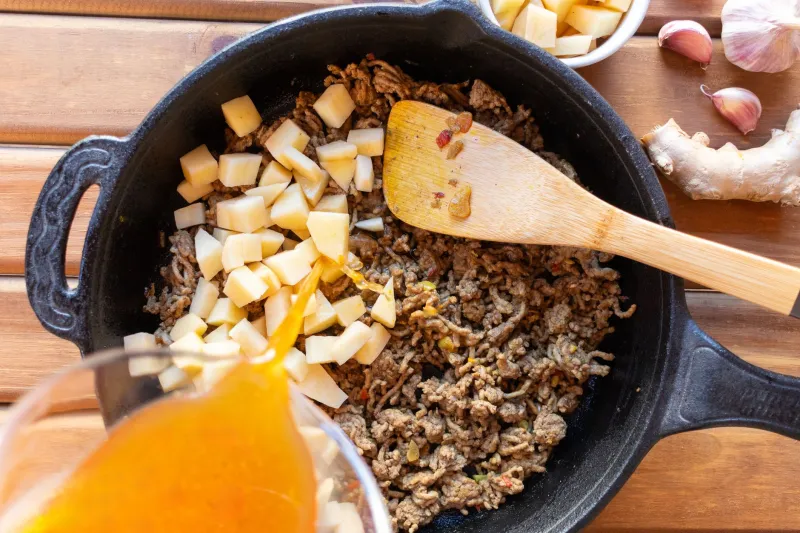
Open your grandmother's kitchen cabinets from 1955, and you'd find something shocking by today's standards: almost nothing. A heavy cast iron skillet that weighed more than most modern cookware sets. A pressure cooker that doubled as a stockpot. A sturdy wooden spoon worn smooth by decades of stirring. Maybe a hand-crank egg beater if the family was feeling fancy.
With these three tools, she fed eight people every single night.
No air fryer. No instant pot. No immersion blender, rice cooker, or countertop convection oven. No specialized gadget for making hard-boiled eggs or another for spiraling vegetables. Just basic equipment that did exactly what it was designed to do, over and over, for decades.
The remarkable thing wasn't what these kitchens lacked — it was what they produced.
When Cooking Meant Actually Cooking
The mid-century American kitchen operated on principles that seem almost revolutionary today: everything was made from scratch, nothing was wasted, and meals happened at the same time every day. The cast iron skillet that fried chicken on Sunday also made cornbread on Tuesday and seared pot roast on Thursday. One tool, endless possibilities.
Cooking wasn't about convenience — it was about technique. Women learned to regulate oven temperature by feel, to know when bread dough had risen properly by touch, to judge doneness by sound and smell rather than digital timers. These weren't just cooking skills; they were a form of practical intelligence passed down through generations.
Meals were planned around what was available and affordable, not what sounded appealing. A whole chicken provided Sunday dinner, Monday's soup stock, and Tuesday's chicken salad. Leftover vegetables became Wednesday's hash. Nothing edible ever hit the trash can.
The Gadget Explosion That Complicated Everything
Walk into today's average American kitchen, and you'll find more cooking equipment than most restaurants owned fifty years ago. The countertops overflow with single-purpose devices: bread makers that get used twice, juicers gathering dust, elaborate coffee systems that require engineering degrees to operate.
We've somehow convinced ourselves that cooking requires specialized equipment for every possible task. Want to make rice? You need a rice cooker. Hard-boiled eggs? There's a gadget for that. Smoothies? That requires a different blender than the one you use for everything else.
This explosion of kitchen technology was supposed to make cooking easier, faster, and more enjoyable. Instead, it made cooking more complicated, more expensive, and somehow less satisfying. The modern kitchen has become a monument to the idea that convenience equals improvement.
The Paradox of Choice and Clutter
Today's home cooks face a peculiar problem: too many options. With fifteen different ways to cook an egg and thirty gadgets promising to revolutionize breakfast, the simple act of making food has become an exercise in decision paralysis.
The old kitchen eliminated choice in favor of mastery. You learned to cook with what you had, which forced you to become genuinely skilled with basic tools. Modern kitchens offer endless shortcuts, but shortcuts don't build the kind of intuitive cooking knowledge that made previous generations so competent in the kitchen.
More troubling is what all these gadgets actually produce: they make cooking feel like work that requires special equipment rather than a basic life skill anyone can master. When every cooking task seems to require its own specialized tool, cooking stops feeling accessible and starts feeling like an expensive hobby.
The Lost Art of Kitchen Confidence
Perhaps the biggest difference between then and now isn't the equipment — it's the confidence. The cook who mastered three basic tools developed an intuitive understanding of heat, timing, and flavor that no gadget can replicate. She could walk into any kitchen and produce a meal because she understood cooking, not just specific appliances.
Today's cooks often feel helpless without their particular equipment. The air fryer cook doesn't know how to roast vegetables in a regular oven. The instant pot enthusiast can't make rice on the stovetop. We've traded versatility for convenience and lost something essential in the process.
The old approach to cooking built real skill because it had to. Without shortcuts, you learned to do things properly. Without specialized equipment, you learned to make basic tools work in multiple ways. Without convenience foods, you learned to transform simple ingredients into satisfying meals.
What We Gained and Lost
Modern kitchen technology isn't inherently bad. The ability to cook rice perfectly every time or blend smoothies quickly has genuine value. Food safety has improved dramatically, and some tasks are genuinely easier with modern equipment.
But we've lost something significant in the process: the deep satisfaction that comes from mastering basic skills with simple tools. The cook who could feed eight people with a cast iron skillet and a wooden spoon possessed a kind of practical competence that's increasingly rare in modern life.
She also possessed something else we've lost: the confidence that comes from true self-sufficiency. When you can create satisfying meals from basic ingredients with basic tools, you're never really helpless in a kitchen. That's a form of security that no amount of specialized equipment can replicate.
The Simple Path Forward
The solution isn't to throw out every modern convenience and return to wood-burning stoves. But there's wisdom in the old approach that's worth recovering: the idea that good cooking comes from skill and technique, not from having the right gadgets.
The most accomplished home cooks today still operate like their grandmothers did: they master basic techniques with versatile tools, they cook from ingredients rather than packages, and they develop the kind of intuitive knowledge that makes cooking feel natural rather than complicated.
Your grandmother's kitchen had three appliances and fed ten people every night because she understood something we've forgotten: the best cooking happens when you stop looking for shortcuts and start building real skill. The cast iron skillet didn't make cooking convenient — it made cooking possible, night after night, for decades.
That's a kind of kitchen wisdom worth rediscovering.