The Doctor Who Knew Your Name Before You Said It: America's Lost Art of Lifelong Pediatric Care

The Man Who Measured Every Inch
Dr. Henderson's office hadn't changed much since 1962. The same wooden height chart stood against the wall, marked with pencil scratches and initials spanning three decades. Children who once stood barely reaching the two-foot mark would return years later with kids of their own, and Dr. Henderson would remember exactly where they'd measured at age five.
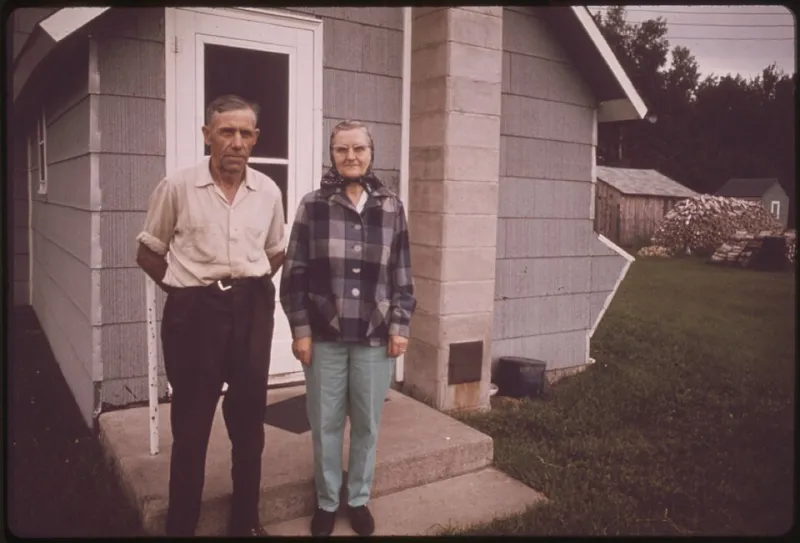
 Photo: Dr. Henderson, via i.pinimg.com
This was American pediatric care for most of the 20th century—deeply personal, remarkably consistent, and built on relationships that lasted from first breath to high school graduation. The family pediatrician wasn't just a medical provider; they were a childhood constant in an ever-changing world.
When Medical Records Were Mental Notes
In 1975, a typical pediatrician might care for 800 patients across multiple generations of the same families. They knew which kids were afraid of needles, whose parents worried too much, and which teenagers would try to hide their real symptoms. Medical histories weren't just written in charts—they were embedded in the doctor's memory through years of observation.
Dr. Margaret Walsh, who practiced in suburban Chicago for forty years, could spot a child's developing scoliosis from across the waiting room. She knew the Johnson boy's asthma flared up every September, that the Miller girl had inherited her mother's tendency toward ear infections, and that the Rodriguez family always brought homemade cookies to December appointments.
This intimate knowledge allowed for nuanced care that today's rapid-fire medical system struggles to replicate. A five-minute interaction could yield insights that might take multiple appointments to uncover with an unfamiliar provider.
The Appointment That Lasted As Long As It Needed
Pediatric visits in the 1960s and 70s operated on a fundamentally different rhythm. Appointments weren't scheduled in precise fifteen-minute blocks. If a worried mother needed to discuss her child's sleep patterns, or if a teenager finally opened up about bullying at school, the conversation continued until it reached its natural conclusion.
Dr. Henderson would often spend thirty minutes with a family, not because the child was particularly sick, but because building trust and understanding took time. He might discuss a child's academic struggles, offer advice about sibling rivalry, or simply listen to a parent's concerns about their teenager's changing behavior.
This unhurried approach created space for the kind of preventive care that went beyond physical health. Pediatricians caught learning disabilities early, identified family stress that might affect a child's development, and provided guidance that extended far beyond medical symptoms.
The Fragmented Present
Today's pediatric care operates with impressive efficiency but little continuity. The average American child might see dozens of different healthcare providers before reaching adulthood—urgent care physicians for weekend fevers, specialists for specific conditions, rotating residents at group practices, and walk-in clinic staff for routine needs.
Each interaction begins with the same ritual: reviewing digital records, asking about allergies, confirming insurance information, and trying to piece together a medical history from electronic notes written by colleagues they've never met. The system excels at treating acute conditions and managing complex medical cases, but it struggles to provide the holistic, relationship-based care that once defined pediatric medicine.
Modern parents often find themselves serving as their child's medical historian, carrying folders of test results and vaccination records from appointment to appointment. They become the continuity that the system itself can no longer provide.
What Efficiency Cost Us
The shift toward fragmented care brought undeniable benefits. Today's children have access to specialized treatments that didn't exist fifty years ago. Emergency care is available around the clock, and serious conditions are diagnosed and treated with unprecedented precision.
But something essential was lost in the transition. The pediatrician who watched a child grow up could spot subtle changes in behavior or development that might signal underlying issues. They understood family dynamics, recognized patterns across siblings, and provided the kind of reassurance that only comes from deep familiarity.
Parents today often describe feeling like strangers in their child's medical care, explaining the same background information repeatedly to providers who see their child as a case rather than a person with a unique history and personality.
The Ripple Effects
This transformation in pediatric care reflects broader changes in American medicine and society. The rise of medical specialization, insurance-driven appointment scheduling, and corporate healthcare has prioritized efficiency over relationships.
Children who grew up with a constant pediatric presence learned to trust medical professionals and developed healthy relationships with healthcare. Today's fragmented system can make medical care feel impersonal and transactional, potentially affecting how young people approach their health as adults.
The loss of the lifelong pediatrician also represents a broader cultural shift away from long-term community relationships. Just as we've lost the neighborhood banker and the family pharmacist, we've also lost the doctor who watched us grow up—another thread in the fabric of American community life that quietly disappeared while we were looking elsewhere.
Looking Back Through the Lens
The era of the lifelong pediatrician wasn't perfect. Rural areas often lacked adequate care, and serious conditions might go undiagnosed without today's sophisticated diagnostic tools. But the relationship-based model offered something that our current system struggles to replicate: the security of being truly known by the person responsible for your health.
As we've gained medical sophistication, we've lost medical intimacy. The question isn't whether we can return to the past, but whether we can find ways to bring some of that personal connection back into the present.