Monkey Bars and Broken Arms: When Playgrounds Actually Tested Your Courage
The Towering Metal Monuments of Childhood
Walk through any American playground built before 1980, and you'll notice something immediately: everything was taller, harder, and designed with what seems like complete disregard for human safety. The monkey bars stretched endlessly across concrete. The slides reached toward the sky like silver skyscrapers, their metal surfaces hot enough to brand your legs on summer afternoons. The merry-go-round could achieve velocities that would make NASA engineers nervous.
And kids loved every dangerous minute of it.
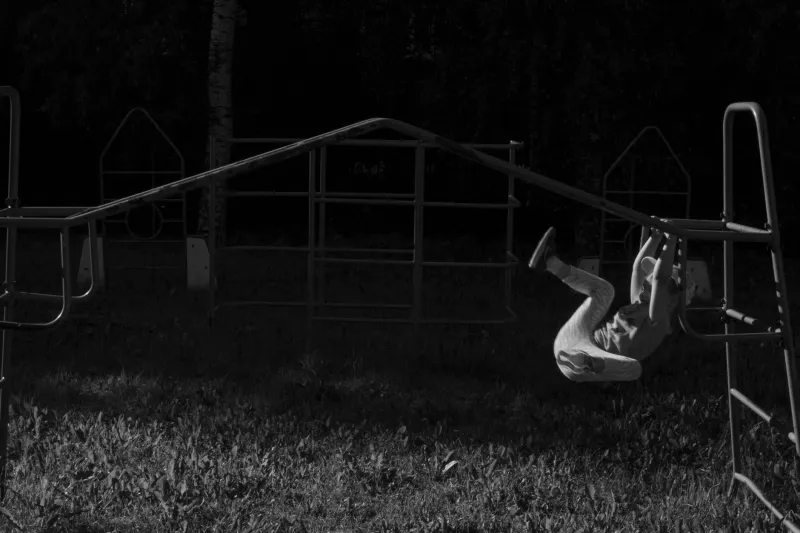
These weren't playground accidents waiting to happen — they were intentional challenges that demanded something from children. You couldn't sleepwalk through the old jungle gym. It required genuine physical courage, spatial reasoning, and the kind of risk assessment that only comes from knowing that failure meant hitting the ground hard.
When Equipment Had Consequences
The old playground equipment didn't just look different — it functioned as a completely different kind of childhood experience. The 12-foot metal slide wasn't just taller than today's 6-foot plastic versions; it was a genuine test of nerve. You had to want to go down badly enough to climb that ladder, knowing the descent would be fast, hot, and potentially painful.
The merry-go-round operated on playground physics that modern safety experts would consider criminal. Kids would pile on while others pushed until the thing spun fast enough to create genuine centrifugal force. Hanging on became an actual skill. Letting go at the wrong moment meant rolling across concrete until friction stopped you.
Even the swings hung from chains long enough to achieve real altitude. The goal wasn't gentle back-and-forth motion — it was to swing high enough to make the chains go slack at the peak, that moment of weightless terror before gravity reasserted itself.
The Rubber Mat Revolution
Today's playground tells a different story. The equipment sits atop thick rubber mats designed to cushion any fall. The slides feature multiple safety rails and gradual inclines. The monkey bars hang low enough that most kids can touch the ground while hanging. Everything is rounded, padded, and engineered to eliminate any possibility of genuine physical challenge.
This transformation didn't happen overnight. It was the result of decades of liability lawsuits, insurance requirements, and a gradual cultural shift toward viewing childhood risk as inherently problematic. By the 1990s, the old metal playground equipment was being systematically removed and replaced with colorful plastic alternatives that prioritized safety over adventure.
The numbers tell part of the story. Playground injuries did decrease as equipment became safer. But something else decreased too: the physical confidence that came from mastering genuinely challenging equipment.
What We Traded Away
The old playgrounds taught lessons that today's versions simply can't replicate. When the monkey bars were high enough that falling actually mattered, kids developed real upper body strength and genuine spatial awareness. When the equipment demanded courage, children learned to assess risk and overcome fear.
More importantly, these playgrounds created a shared childhood experience of physical mastery. Every kid in America knew the specific fear of standing at the top of the big slide, the satisfaction of finally making it across the monkey bars, the dizzy triumph of surviving the merry-go-round at full speed.
These weren't just playground activities — they were rites of passage that built confidence in ways that extended far beyond recess. Kids who could handle the old playground equipment developed a relationship with physical risk that served them throughout childhood and beyond.
The Unintended Consequences of Safety
Today's playgrounds are undeniably safer, but they've also become less engaging. Visit any modern playground and you'll notice something telling: kids get bored faster. The equipment that takes all the risk out of play also removes much of the excitement.
This shift reflects a broader change in how America thinks about childhood risk. Where previous generations saw controlled danger as an essential part of growing up, we now view any potential for injury as unacceptable. The result is playground equipment that's so safe it's almost meaningless.
Pediatricians and child development experts increasingly warn about "cotton wool kids" — children so protected from physical challenge that they never develop real confidence or risk assessment skills. The playground, once a training ground for courage, has become another controlled environment where real growth is nearly impossible.
The Courage We Used to Build
The old playgrounds weren't perfect. Kids did get hurt, sometimes seriously. But they also built something that's increasingly rare in modern childhood: the confidence that comes from facing genuine physical challenges and overcoming them.
When we removed the danger from playgrounds, we didn't just make them safer — we made them less meaningful. The monkey bars that used to test your strength now hang low enough for anyone to reach. The slide that once required courage now offers nothing more challenging than a gentle slope.
We solved the problem of playground injuries, but we created a new problem: playgrounds that don't actually challenge children to grow. In our effort to protect kids from every possible harm, we may have protected them from some of the experiences that help them become confident, capable adults.
The old playground equipment is mostly gone now, replaced by safer alternatives that prioritize liability over adventure. But the lessons it taught — about courage, persistence, and the satisfaction of mastering something genuinely difficult — are worth remembering as we think about what childhood should actually provide.