When Words Took Weeks to Travel and Hearts Had Time to Heal
The Lost Rhythm of Slow Conversation
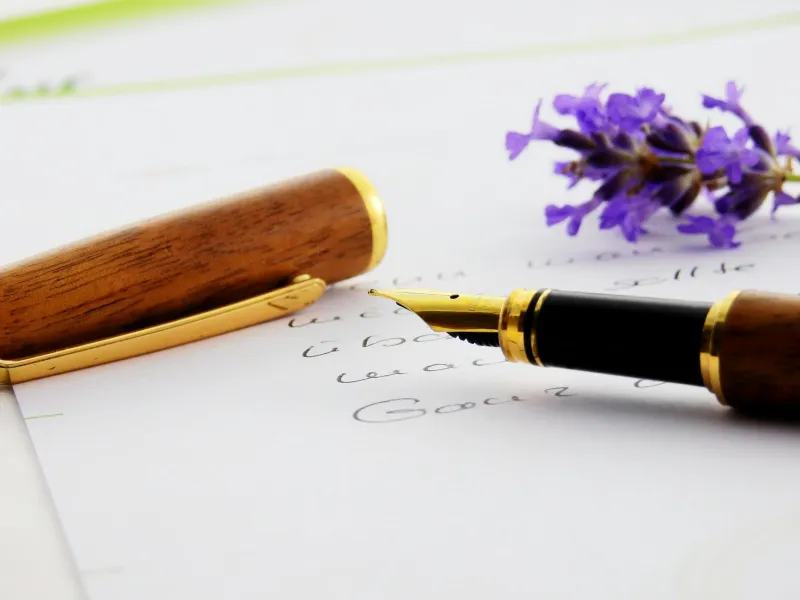
In 1975, if you wanted to tell your college roommate about your new job in another state, you sat down with a pen and paper. You thought about what you wanted to say. You wrote it out, crossed things out, maybe started over. You sealed the envelope, bought a stamp, and dropped it in a mailbox. Two weeks later, your friend would hold that letter—the same piece of paper you had touched—and read your actual handwriting.
Today, you'd fire off a text before you even left the interview.
The speed is miraculous. The intimacy is gone.
When Distance Created Depth
American letter-writing culture wasn't just about communication—it was about contemplation. Because you couldn't take back what you wrote, you chose your words carefully. Because you couldn't immediately clarify a misunderstanding, you explained yourself fully the first time. Because you might not hear back for weeks, you made each letter count.
Families separated by migration wrote letters that became family histories. Soldiers overseas penned thoughts they'd never spoken aloud. Young couples courting through the mail developed emotional intimacy that preceded physical presence. The delay wasn't a bug—it was a feature that forced depth over speed.
Consider this: in 1970, the average American household received about 20 personal letters per year. Today, the average smartphone user sends and receives over 70 text messages per day. We're communicating 1,000 times more frequently and saying infinitely less.
The Telegram Era: When Brevity Had Purpose
Before letters, there were telegrams—America's first taste of instant long-distance communication. But telegrams cost money by the word, so people learned to be economical with language. "ARRIVING TUESDAY STOP BRING UMBRELLA STOP LOVE MOTHER" said everything it needed to say because every word mattered.
Telegrams taught Americans that urgent communication should be brief and important communication should be detailed. We've flipped that equation entirely.
The Read Receipt Revolution
Nothing captures the transformation of American communication quite like the read receipt. This tiny feature—those two blue checkmarks, that "Read at 3:47 PM" timestamp—has fundamentally altered the social contract of conversation.
In the letter-writing era, you sent your thoughts into the void and trusted they'd arrive. You didn't know when someone read your words, so you couldn't take their silence personally. Today, we know exactly when someone saw our message, turning every delayed response into a potential slight.
The read receipt has created a new form of social anxiety that previous generations literally couldn't experience. Your great-grandmother never lay awake wondering why someone "left her on read" because the technology for that particular torture didn't exist.
What Speed Cost Us
The shift from letters to instant messaging represents one of the most dramatic changes in human communication since the invention of writing itself. We gained the ability to maintain constant contact with anyone, anywhere. We lost the ability to sit with our thoughts before sharing them.
We gained the power to resolve misunderstandings immediately. We lost the patience to craft messages that wouldn't create misunderstandings in the first place.
We gained access to everyone's immediate reactions. We lost the space for our own delayed ones.
The Always-On Expectation
Perhaps most significantly, we've traded the rhythm of correspondence for the tyranny of availability. In 1975, if someone wanted to reach you, they called during reasonable hours or wrote a letter. If you weren't home, they tried again later. No one expected immediate responses because immediate responses were impossible.
Today, the smartphone has made us all perpetually reachable, and with that reach comes expectation. The same technology that was supposed to give us more flexibility has instead created an obligation to be constantly responsive.
When Waiting Was Normal
The two-week letter wasn't just slower—it operated on an entirely different emotional timeline. You had time to miss someone before they replied. You had space to wonder what they were thinking. You experienced the full arc of sending a thought into the world and waiting for its return.
This wasn't inefficiency. It was emotional pacing that matched human psychology. We're social creatures, but we're also creatures that need time to process, reflect, and respond thoughtfully.
The Handwriting Connection
There was something irreplaceably personal about recognizing someone's handwriting on an envelope. Your mother's careful cursive. Your best friend's barely legible scrawl. Your grandmother's shaky but determined script. Each letter was not just a message but a physical artifact of the person who sent it.
Today's digital communication is perfectly legible and completely anonymous. Every text message looks the same regardless of who sent it. We've gained clarity and lost personality.
Finding Balance in a Fast World
The speed of modern communication isn't inherently bad—it's saved lives, maintained relationships across vast distances, and connected people who might never have found each other otherwise. But understanding what we traded away might help us use these tools more intentionally.
Maybe the lesson isn't to go back to handwritten letters, but to remember that not every thought needs to be shared immediately, not every message requires an instant response, and not every conversation benefits from the kind of rapid-fire exchange that our devices encourage.
The two-week letter taught Americans that some things are worth waiting for. In our age of instant everything, that might be the most radical idea of all.