See How Far We've Come

Then & Lens

See How Far We've Come

Latest Articles

When Your Doctor Knocked on Your Door: How America Lost the House Call
Culture

When Your Doctor Knocked on Your Door: How America Lost the House Call

Sixty years ago, your family doctor would show up at your front door with a black bag and a thermometer. Today, you're texting a chatbot about your symptoms and hoping for a callback. Here's how we went from bedside manner to booking apps.

Seven AM Sharp: When Every Kid in America Watched the Same Thing
Culture

Seven AM Sharp: When Every Kid in America Watched the Same Thing

For thirty years, Saturday morning television united American children in a weekly ritual that defined generations. Then cable TV and regulatory changes quietly ended the tradition that once brought kids together in front of the same screen at the same time.

When Your Doctor Actually Knew You: The Lost Art of Personal Medicine
Culture

When Your Doctor Actually Knew You: The Lost Art of Personal Medicine

There was a time when your family doctor knew three generations of your relatives, made house calls at midnight, and could diagnose you just by how you walked into the room. That era of deeply personal healthcare feels almost mythical compared to today's assembly-line medicine.

Remember When Getting Away Actually Meant Getting Away? How Family Trips Became Another Form of Work
Travel

Remember When Getting Away Actually Meant Getting Away? How Family Trips Became Another Form of Work

Family vacations once required months of planning through travel agents and paper brochures, building genuine anticipation for rare getaways. Today's instant booking apps and endless options have somehow transformed our escapes into stressful optimization projects that follow us everywhere.

Six O'Clock Sharp: How America Lost Its Most Sacred Hour
Culture

Six O'Clock Sharp: How America Lost Its Most Sacred Hour

For decades, American families gathered around the dinner table at the same time every night, no exceptions. That ritual shaped childhoods, strengthened bonds, and structured entire households. Then everything changed.

Kids Used to Be Unsupervised. The Shift Happened Faster Than Anyone Realized.
Culture

Kids Used to Be Unsupervised. The Shift Happened Faster Than Anyone Realized.

In the 1970s and 1980s, American children roamed their neighborhoods with minimal adult oversight, settling their own disputes and building their own amusement. Today's kids live in a state of near-constant supervision. The change wasn't driven by a rise in actual danger—it was driven by perception, media panic, and a fundamental shift in how we define parental responsibility.

Going to the Movies Used to Mean Something. Now It's Just Content You Forgot to Watch.
Technology

Going to the Movies Used to Mean Something. Now It's Just Content You Forgot to Watch.

Fifty years ago, going to the movies was a ritual—you dressed up, you arrived early, you sat in a grand theater with strangers who shared the experience. Today, movies are one of 10,000 streaming options you'll never get around to watching. The shift from event to content has fundamentally changed what cinema means.

Your Doctor Used to Remember Your Medical History. Now They're Reading It for the First Time.
Culture

Your Doctor Used to Remember Your Medical History. Now They're Reading It for the First Time.

Sixty years ago, your family doctor knew your childhood illnesses, your mother's health struggles, and whether you handled stress well. Today's primary care physicians see you for seven minutes between 40 other patients, armed with an electronic record they're still scrolling through. What we gained in medical knowledge, we quietly lost in human continuity.

The Minimum Wage Used to Pay the Rent. Now It Barely Covers the Groceries.
Culture

The Minimum Wage Used to Pay the Rent. Now It Barely Covers the Groceries.

When the federal minimum wage was born in 1938, it was designed to keep working Americans out of poverty. Decades later, the math tells a very different story — and most people have no idea how much ground has quietly been lost.

When a Degree Was Worth the Gamble: How College Stopped Being a Fair Deal
Technology

When a Degree Was Worth the Gamble: How College Stopped Being a Fair Deal

In the postwar decades, a college degree was one of the most reliable bets an American could make — affordable, accessible, and almost guaranteed to pay off. The math has changed so dramatically since then that the original deal is barely recognizable. Here's what happened.

Forty Thousand Choices and Nothing to Eat: How the American Grocery Store Got Out of Hand
Culture

Forty Thousand Choices and Nothing to Eat: How the American Grocery Store Got Out of Hand

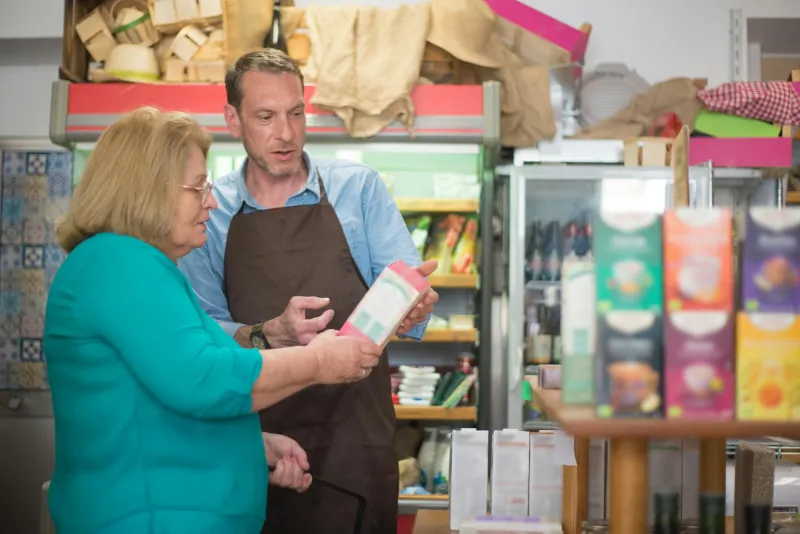
Your great-grandmother didn't agonize over which of fourteen oat milk varieties to buy. She knew her butcher by name, bought what was in season, and went home. Somewhere between then and now, grocery shopping became a completely different kind of experience — and not entirely a better one.

What $20 Used to Feed a Family — and What It Barely Covers Today
Culture

What $20 Used to Feed a Family — and What It Barely Covers Today

In 1975, $20 at the grocery store filled a paper bag with enough to feed a family of four for several days. Today, that same bill might cover a rotisserie chicken, a bag of salad, and a bottle of olive oil — if you're lucky. The cart looks different, the prices are unrecognizable, and the question of whether Americans are actually eating better is more complicated than it seems.

Hello? A Century of Americans Trying to Stay in Touch
Technology

Hello? A Century of Americans Trying to Stay in Touch

A hundred years ago, millions of American households shared a single phone line with their neighbors and considered it modern. Today, a teenager in Ohio can video call someone in Tokyo while simultaneously texting three other people. The distance between those two realities is hard to fully grasp — and the story of how we got here is stranger and more human than you might expect.

Same Highway, Completely Different Planet: The American Road Trip Then and Now
Travel

Same Highway, Completely Different Planet: The American Road Trip Then and Now

In 1955, driving coast to coast meant wrestling with paper maps, praying the engine held, and sleeping in whatever roadside cabin you could find before dark. Today, your car practically navigates itself while you stream a podcast and search for the nearest EV charger. The road is the same — almost everything else has changed.

Before the Interstate: What a Coast-to-Coast Drive Actually Cost You in 1950
Travel

Before the Interstate: What a Coast-to-Coast Drive Actually Cost You in 1950

Driving from New York to Los Angeles in 1950 wasn't a road trip — it was an expedition. Before the Interstate Highway System existed, crossing the country meant weeks of unpaved roads, uncertain fuel stops, and a whole lot of hope. Here's how radically that journey has changed.

Walter Cronkite Signed Off. Then Everything Changed About How America Gets the News.
Technology

Walter Cronkite Signed Off. Then Everything Changed About How America Gets the News.

There was a time when most Americans watched the same newscast, trusted the same anchors, and largely agreed on what the day's important stories were. That world is gone — replaced by something faster, louder, and far more complicated. The story of how it happened is more fascinating than most people realize.

The Heart Attack Used to Be a Goodbye. Medicine Changed That Completely.
Culture

The Heart Attack Used to Be a Goodbye. Medicine Changed That Completely.

Sixty years ago, a heart attack was often the last chapter of a person's story. Today, the majority of Americans who suffer one walk out of the hospital and go home. The transformation in cardiac care is one of modern medicine's most quietly astonishing achievements — and most people have no idea how dramatic the shift has been.

The 9-to-5 Is Gone. What Replaced It Isn't Exactly What We Asked For.
Culture

The 9-to-5 Is Gone. What Replaced It Isn't Exactly What We Asked For.

Forty years ago, most Americans left work at work. There was no after-hours email, no Slack ping at 9pm, no blurred line between the kitchen table and the conference room. Today's workday is more flexible than anything workers in the 1980s could have imagined — but flexibility and freedom aren't always the same thing.

We Used to Drive Across America With a Paper Map and Absolutely No Backup Plan
Technology

We Used to Drive Across America With a Paper Map and Absolutely No Backup Plan

Before GPS and Google Maps, a cross-country road trip meant folding a map badly, stopping at gas stations for directions, and occasionally just being lost — sometimes for hours. It sounds chaotic. In a lot of ways, it was. But something about navigating without a safety net made the journey feel like it actually meant something.

Flying Used to Be a Big Deal. Here's What We Traded Away to Make It Cheap.
Travel

Flying Used to Be a Big Deal. Here's What We Traded Away to Make It Cheap.

In the 1970s, boarding a commercial flight meant dressing up, sitting down to a hot meal, and paying what would be thousands of dollars in today's money. Somewhere between then and now, flying stopped being an occasion and became something closer to a bus ride with wings. The question is whether that trade-off was actually worth it.