Before You Could Google It, You Had to Ask a Human Being
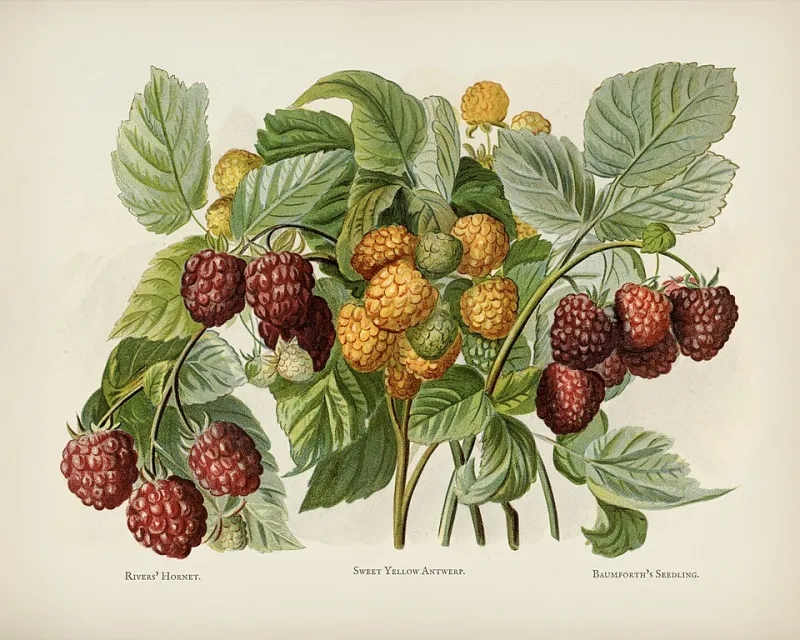
Photo: May Rivers, Public domain, via Wikimedia Commons
Imagine needing to find a plumber on a Tuesday afternoon with no smartphone in your pocket and no browser tab to open. You'd flip through the Yellow Pages, maybe call a neighbor, possibly drive past a few storefronts to check their hours. The process took time. It required other people. And the information you ended up with came from sources you could actually trace back to a human being.
That's not a complaint about the past. It's just a description of a world that worked — differently, and in some ways better than we give it credit for.
The Thickness of the Phone Book
For most of the twentieth century, the phone book was the closest thing America had to a local search engine, and it arrived every year on your doorstep without you asking for it. The White Pages gave you people. The Yellow Pages gave you businesses, organized by category, in a format that required zero personalization and zero algorithmic curation. Everybody got the same book.
This sounds limiting until you consider what it meant in practice. When you looked up "electricians" in the Yellow Pages, you got electricians — the ones who paid for a listing, sure, but also every licensed contractor in the area who wanted to be found. The playing field wasn't flat, but it wasn't secretly tilted by invisible ranking systems either. A small family-run shop appeared alongside larger competitors without being systematically buried by a paid placement algorithm.
The phone book was also a social artifact. People wrote in the margins. They dog-eared pages. They crossed out numbers that had changed and scrawled new ones in pencil. It was, in a strange way, a living document of a community's commerce.
The Reference Desk Was a Search Engine With a Pulse
For questions the phone book couldn't answer, there was the library — specifically, the reference desk, which was staffed by people whose entire professional purpose was helping you find things you didn't know how to find.
Reference librarians were a genuinely remarkable resource. They knew how to navigate trade directories, government databases, historical archives, and obscure periodicals that most people didn't know existed. They could help you research a medical condition, track down a long-lost relative, find the going rate for a used tractor, or locate a regulation your landlord was probably violating. And they did all of this for free, for anyone who walked in.
The interaction required you to articulate what you actually needed, which turned out to be useful in itself. Explaining your question to another person forced a clarity that typing fragments into a search bar doesn't require. The librarian might push back, ask a follow-up, redirect you toward something more useful than what you thought you wanted. The search wasn't just a lookup — it was a conversation.
Word of Mouth Was the Algorithm
For a lot of everyday decisions — which mechanic to trust, which doctor was worth the wait, which restaurant wouldn't give you food poisoning — Americans relied on something search engines have never fully replicated: the recommendation of someone who knew you.
Word of mouth operated on genuine social accountability. If your brother-in-law recommended a roofer who turned out to be a disaster, there were consequences — at minimum, an uncomfortable Thanksgiving. The recommendation came with the recommender's reputation attached. That skin-in-the-game quality is exactly what online reviews, however numerous, struggle to reproduce.
Classified ads played a similar role in the pre-internet information economy. The back pages of local newspapers were dense with human need and human offering — jobs, rentals, items for sale, services rendered. Reading the classifieds was a way of taking the temperature of a community, seeing what people needed and what they had to give. It was inefficient by modern standards and surprisingly effective by almost any other measure.
The Trade-offs of Infinite Information
Search engines changed everything about how Americans find information, and the speed and breadth of that change is genuinely staggering. The ability to locate almost any fact, business, person, or piece of knowledge within seconds is not a small thing. It has transformed medicine, education, commerce, and daily decision-making in ways that have saved time, money, and lives.
But the information environment created by search is not neutral, and it's worth being clear-eyed about that.
When you search for a local business today, what surfaces first is shaped by a combination of paid advertising, search engine optimization spending, platform reviews that may or may not be authentic, and ranking factors that the average user has no visibility into. The small family-run shop that once had the same phone book listing as everyone else now competes against businesses with dedicated digital marketing budgets. The playing field didn't just tilt — it tilted invisibly, in ways most people don't notice because the results look authoritative.
There's also the filter problem. Search engines learn from your behavior and adjust results accordingly, which sounds helpful until you realize it means you're increasingly shown information that confirms what you already believe and buy from sources that already have your data. The phone book didn't know anything about you. It just listed things.
The Patience the Old System Required
Finding information before the internet required patience, and patience required presence. You had to be somewhere — the library, the hardware store, your neighbor's kitchen — and interact with someone who was also somewhere. Those interactions had texture. They took time. They occasionally led somewhere unexpected.
The hardware store owner who helped you find a part you couldn't name might also mention that the guy two streets over had the same problem last month and solved it a different way. The reference librarian who helped you research a medical question might point you toward a community support group you didn't know existed. The neighbor who gave you a restaurant recommendation might invite you in for coffee.
Search doesn't do any of that. It answers the question you typed and waits for the next one.
What We Traded and What We Got
The old information ecosystem was slow, uneven, and dependent on access to community networks that not everyone had equally. The new one is fast, comprehensive, and available to anyone with a connected device.
But fast and comprehensive isn't the same as trustworthy or complete. A search result that surfaces a paid listing above a better local option isn't serving you — it's serving the advertiser. An algorithm that filters your results based on your previous behavior isn't expanding your world — it's narrowing it.
The phone book didn't know your name. The reference librarian didn't remember your search history. The neighbor who gave you a recommendation had to live with the consequences of it.
There was something honest in all of that. Imperfect, slow, and entirely human — but honest.