We Used to Make the Music Ourselves: The Quiet Death of America's Singing Culture
Photo: Joe Haupt from USA, CC BY-SA 2.0, via Wikimedia Commons
We Used to Make the Music Ourselves: The Quiet Death of America's Singing Culture
Somewhere in the late nineteenth century, if you wanted to hear music on a Tuesday night, you had two choices. You could make it yourself, or you could find someone who would make it with you. There was no third option. There was no playlist, no algorithm, no app that knew you liked mid-tempo folk ballads when you were feeling melancholy.
And somehow, people were fine.
More than fine, actually. Music was woven into the texture of daily American life in a way that feels almost impossible to imagine now — not as background noise or personal soundtrack, but as a shared, active practice that required something from you. Participation. Effort. A willingness to sound a little rough around the edges in front of people you loved.
The Parlor Piano Was the Original Streaming Service
For much of the 1800s and into the early twentieth century, the upright piano sitting in the parlor wasn't decoration. It was infrastructure. Families gathered around it the way families today gather around a television screen — except someone had to actually play the thing.
Sheet music sales were enormous business. Publishers in New York and Chicago cranked out popular songs by the millions, and learning to read music was considered a basic social skill, roughly equivalent to knowing how to set a table. Young women were expected to play. Young men were expected to at least sing along. Community singing events — church socials, grange halls, neighborhood gatherings — were standard weekend entertainment across most of the country.
Barbershop quartets, which give this era some of its most recognizable imagery, weren't novelty acts. They were just guys who liked to harmonize. The barbershop itself was a social hub, and four-part harmony was something ordinary men practiced because it felt good and because there was nowhere else to get your music fix.
You didn't need talent. You needed willingness.
When Edison Changed Everything (And Not All of It for the Better)
Thomas Edison's phonograph arrived in 1877, and the world didn't immediately understand what it meant. At first, recorded music felt like a curiosity — a parlor trick. But by the 1920s, with radio broadcasts reaching across the country and the record industry finding its footing, something fundamental began to shift.
For the first time in human history, you could hear music performed by someone far better than you. You could listen to a professional orchestra without leaving your living room. You could hear jazz from New Orleans, gospel from Georgia, blues from the Mississippi Delta — all without knowing a single note yourself.
 Photo: Mississippi Delta, via images.fineartamerica.com
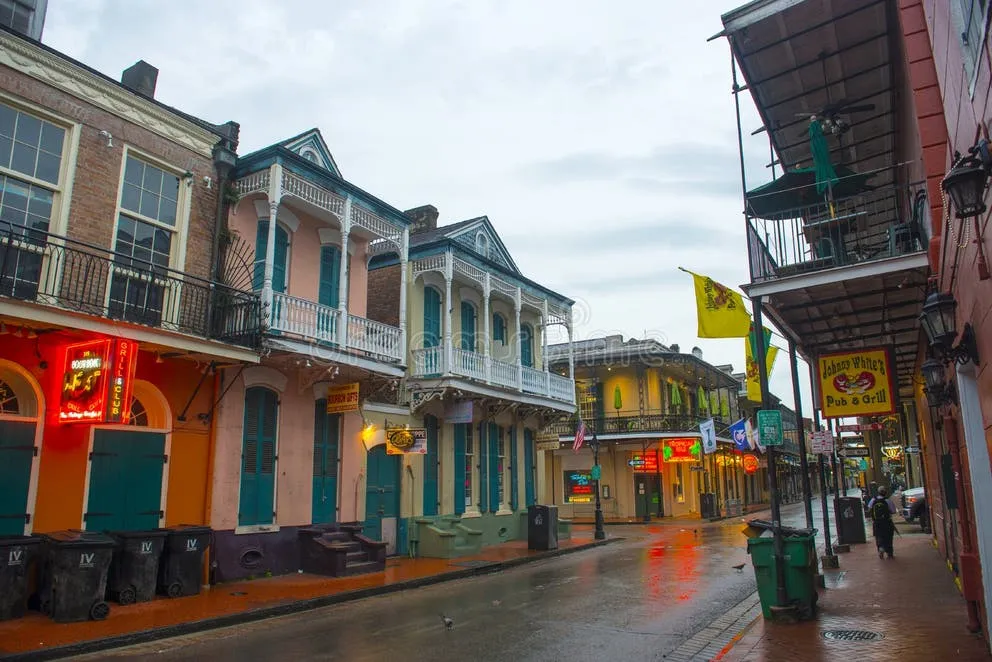 Photo: New Orleans, via thumbs.dreamstime.com
This was genuinely extraordinary. It democratized access to musical excellence in ways that were hard to argue against. But it also, quietly and gradually, made the act of making music feel optional. Then amateur. Then slightly embarrassing.
Why sing when you could listen to someone who actually knew what they were doing?
The Professionalization of Listening
By mid-century, the shift was well underway. Music education in schools began to shrink. Families stopped buying sheet music and started buying records. The parlor piano moved to the corner of the living room, then to the garage, then to someone's curb with a FREE sign taped to it.
The music industry grew into a massive commercial enterprise, and with it came a very specific message, delivered not through any single advertisement but through the entire culture: music is something that professionals make and regular people enjoy. Your job is to consume it correctly — to have good taste, to buy the right albums, to follow the right artists.
By the time the iPod arrived in 2001, carrying a thousand songs in your pocket felt like liberation. And in many ways it was. But it also completed a century-long process of transforming music from something you did into something that happened to you.
What the Numbers Actually Tell Us
Today, Americans stream over 180 billion songs annually. The average person listens to music for roughly 26 hours per week. Music is everywhere — in our cars, our offices, our grocery stores, our earbuds during workouts and commutes and awkward social situations we'd rather not fully experience.
And yet fewer than 10 percent of American adults play a musical instrument regularly. School music programs have been cut in districts across the country, often among the first casualties of budget shortfalls. Community choirs, once a fixture in small-town American life, have dwindled. The idea of gathering with neighbors to sing together — just for the pleasure of it — strikes most people today as either quaint or mildly eccentric.
We are, statistically speaking, surrounded by more music than any generation in human history. We are also, arguably, less musically connected than any generation since before instruments were invented.
The Thing Nobody Talks About
Here's what gets lost in that transition, and what's genuinely hard to quantify: when music was something you made together, it created a specific kind of bond. Harmonizing with another person — even badly, even off-key — requires you to listen to them. Really listen. To adjust your voice to theirs, to find the space your sound occupies next to their sound.
It's an act of attention and cooperation that has almost no modern equivalent.
The community sing-along, the church choir, the front porch with a guitar and whoever showed up — these weren't just entertainment. They were social technology. They built the kind of low-stakes togetherness that researchers now spend a lot of time trying to recreate through apps and community initiatives and loneliness task forces.
We didn't lose music. We have more of it than ever. What we lost was the version of music that required us to show up for each other.
And that's the part that doesn't fit in your earbuds.